


- INTERVIEW
Interview with Les Échos
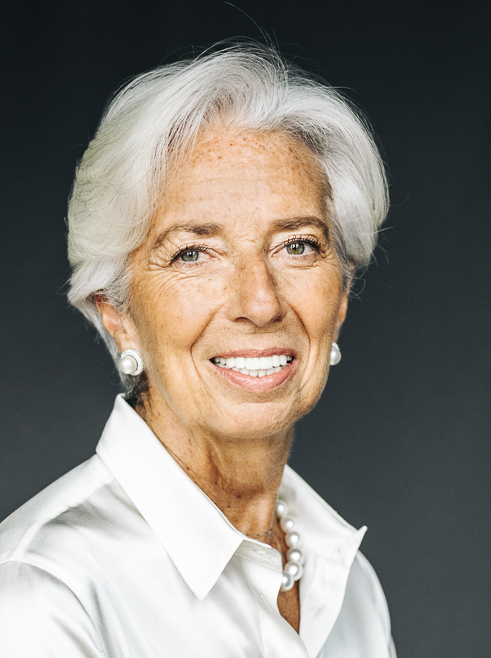
Interview with Christine Lagarde, President of the ECB, conducted by Guillaume Benoit and Christophe Jakubyszyn on 24 June 2026
2 July 2026
On 11 June, the ECB raised its key interest rates. Do you still think that was the right decision, given that just ten days later Iran and the United States agreed a 60-day ceasefire?
We are confident that we made the right choice. As early as April, a large majority of Governing Council members were already prepared to take a decision. But at that point we still didn’t have all the necessary information.
All the data we have received since then have confirmed our analysis. We are facing an external supply shock that is currently spreading to the rest of the economy and whose indirect effects we can already see. We are also keeping a close eye on the risk of second-round effects, even though they have not yet materialised.
What form are these tensions taking?
Inflation excluding energy and food is accelerating, rising from 2.2% to 2.5%. This is partly due to services prices, which have increased by 3.5% as compared with the 3% that was projected. When you have rising inflation, rising services prices and inflation projections of 3% for 2026, 2.3% for 2027 and 2% for 2028, the monetary policy decision seemed clear.
And this holds true even under the more favourable scenario (the war ending, the Strait of Hormuz reopening quickly, a fall in the oil price…), which we considered in addition to two other scenarios – adverse and severe – that we presented back in March.
Isn’t there a risk that this monetary tightening could slow the economy too much?
We only lowered our growth forecast by 0.1 percentage points, from 0.9% in March to 0.8% in June. The unemployment rate is close to its historic low and labour force participation continues to increase – more slowly, admittedly, but it is still increasing. The financial sector is robust, with well capitalised banks and no known risk of significant financial instability. I have to say that we considered lowering our growth forecasts a little more. But the national central banks, who contributed to the June economic projections, saw sufficient signs of growth in activity.
Should we expect further tightening at one of the upcoming meetings?
I honestly don’t know. At the end of each monetary policy meeting, during the press conference, I repeat the same line. We take a decision at each meeting, based on our assessment of the inflation outlook and the risks surrounding it, the incoming economic and financial data, the dynamics of underlying inflation and the strength of monetary policy transmission. As I have said before, I have a general sense of the direction we will take, but the facts will guide us within our monetary policy framework, which is very clear.
You said recently that the renminbi was undervalued. Do you think we’re on the cusp of a new currency war between China, the United States and the European Union?
It’s certainly the case that there are excessive current account imbalances. That does not necessarily translate into a currency war. But when some estimates of the International Monetary Fund conclude that the renminbi is undervalued by around 16%, you have to take the issue seriously, even if these estimates are subject to a degree of uncertainty. If Heads of State or Government decide to address the problems of current account surpluses, the Chinese will inevitably have to be part of the discussion.
What role can Europe play between the Americans and the Chinese?
Europe is often still described as a giant with feet of clay, even though we are a large economy with 450 million consumers, 360 million of whom are in the euro area. We have untapped productivity reserves and innovative capacity that have yet to be fully exploited. And above all, we have significant amounts of dormant savings – around €35 trillion – far too little of which is being invested in Europe!
It’s imperative that we take action, rather than just enduring. If we act on the fifteen or so major reforms set out in the Draghi report, in combination with the Letta report – which aims to create a genuine internal market by removing as many barriers as possible – we will be much stronger.
The European Parliament’s Economic and Monetary Affairs Committee has given the green light to the digital euro. What will this mean for citizens?
Merchants, who typically pay a fee to the generally foreign-owned operators of international card schemes or other payment networks, will pay much less. Because the ECB, as a central bank, is not looking to make a profit.
And individuals will be able to use the digital euro at all points of sale, on all e-commerce sites, and even for person-to-person payments, just like euro coins and banknotes. Additionally, a foreign power won’t be able to deprive them of their means of payment! I’m thinking in particular of the French judge Nicolas Guillou, at the International Criminal Court, who can no longer use his payment cards operated by foreign companies, simply because the US Administration sanctioned him for authorising the arrest warrants against the Israeli Prime Minister, Benjamin Netanyahu.
Are there no reservations?
We have put a lot of effort into explaining it, and we must continue to do so, because this is a project that isn’t easy to grasp and populists won’t hesitate to exploit it. For example, they are claiming that your employer will have to pay your wages in digital euro, that the government will thus be able to monitor all your spending and that, with a “programmable” euro, you could be prevented from spending your money as you see fit. That’s science fiction, it’s Big Brother reinvented, but it’s not true!
The banks have called for a cap on digital euro holdings. Are they right to be concerned that it could drain the deposits that are essential to their monetary power?
Even assuming that everyone over the age of 14 had a digital euro account and was always at their holding limit – which has not yet been determined but is expected to be around €3,000, maybe higher – the total outstanding amount would be minimal compared with total deposits in bank accounts. And we should not forget that the mechanism we have designed requires the intermediation of banks. They are the ones who will offer you this “central bank” euro account, just as they offer card services or systems using the networks of major international operators.
Let’s talk about financial stability. Are you concerned about the levels of public debt?
Looking at the public debt of Member States – in my case focusing on the debt of the euro area – we are at around 88% of GDP. We are indeed not within the prescribed limits. And there are significant divergences between, on the one hand, countries such as Greece, Italy, Belgium and France, and, on the other, Luxembourg, Estonia and Ireland. Clearly, there are public debt and indebtedness trajectories within Member States that need to be monitored very closely – and, in some cases, corrected. But I take a consolidated view for the euro area. So no, I am not concerned, provided that commitments are honoured.
Do you think that France’s main handicap today is its fiscal situation?
It is above all its inability to reform. I am not saying that the fiscal situation is not serious, but the main challenge is being unable to carry out structural reforms, which, if successfully implemented, would improve the fiscal outlook.
Do you see any risks that are not being sufficiently taken into account at present?
Yes, I do. Artificial intelligence is a source of productivity gains and opportunities, but it also poses a major risk.
For about a decade now we have been talking about cybersecurity risks, hacking, data theft and so on. But with the acceleration and deepening of AI models, we are confronted with a much more serious risk. Because it is happening very, very quickly, and because the means of defence – and the funding required for them – have yet to be found.
Were you worried by the US Government’s provisional decision to make the Mythos 5 and Fable 5 systems available only to US nationals?
Europe is on the back foot: those who can test these tools gain a competitive advantage and are better able to protect themselves against their malicious use. We need an international framework, because one party's vulnerability ultimately becomes everyone's vulnerability.
At one point, you strongly advocated the view that monetary policy should also have a social and environmental component. Have you succeeded in this?
Yes, I believe that the European Central Bank, within the limits of its mandate and its roadmap, must urgently address the dual issue of climate change and biodiversity conservation.
Failing to take climate change into account when drawing up macroeconomic projections means that you miss out on factors that will be decisive for growth and inflation. Climate change is now incorporated into our macroeconomic projections and, accordingly, into the models we work with.
And secondly, we also need to incorporate this into risk management. When we allow banks to obtain funding from us and then to grant loans, we need to know the value of the claims they provide as collateral. In simple terms, if the collateral consists of a mortgage loan on a property located in a flood-prone area or on a cliff-edge, it is probably worth significantly less than its stated value. We now apply this type of haircut to new refinancing requests.
There has been a lot of conflicting information about your possible early departure. So, how long will you continue to serve as President of the ECB?
My term runs until October 2027. And I see my mission as ensuring price stability. Given that we are once again going through a turbulent period, I believe the captain of the ECB ship must stay on board.
Does this mean that if the waters calm down, you do not rule out the possibility of leaving earlier? For example, if you wish to take part in the French political debate in 2027?
It’s possible. I believe that a European voice needs to be heard in the French presidential debate.
If this debate were to reveal a more limited vision of France’s place within Europe, I think it would be necessary to explain why that would be a painful path for our country and for our fellow citizens.
You are not ruling out, in the coming months, in your capacity as ECB President, having a frank discussion with some of the candidates?
That is certainly possible.
What would you say to them?
I would speak with a French and a European voice, because I am profoundly both. I would tell them that France must play a decisive role in the economic future of our continent. And that without this European environment and anchoring, our economic prospects would, at the very least, be unclear.
France will have to take courageous decisions on difficult issues. Candidates in the presidential election have a duty to address these issues and to propose solutions. And, contrary to what I often hear from politicians, the French are fully aware of the situation, and they expect a candid discussion along with concrete solutions.
Given the political context, and the possibility of extremist parties gaining power, might you at some point consider getting involved in the campaign, to support a candidate, or even to stand yourself?
I will reflect on it.
You will reflect on it?
No, I’m joking. I don’t think that’s currently on the agenda.
Europska središnja banka
glavna uprava Odnosi s javnošću
- Sonnemannstrasse 20
- 60314 Frankfurt na Majni, Njemačka
- +49 69 1344 7455
- media@ecb.europa.eu
Reprodukcija se dopušta uz navođenje izvora.
Kontaktni podatci za medije