







Tariffs and foreign direct investment – a nuanced relationship
Published as part of the ECB Economic Bulletin, Issue 3/2026.
Tariffs have re-emerged as a key policy tool amid rising protectionism, sparking debates about their impact on foreign direct investment (FDI). While traditionally associated with restricting trade and protecting domestic industries, tariffs have recently been used by some countries, including the United States, as part of a broader industrial strategy.[1] Such strategic measures seek to reshape global production patterns, enhance economic resilience and address geopolitical fragmentation by seeking to attract inward FDI into the tariff-imposing country.[2] However, the effectiveness of tariffs in attracting FDI, especially in the manufacturing sector, is still disputable given the mixed evidence in the empirical literature.
The relationship between tariffs and FDI is ambiguous and highly dependent on the type of FDI. Tariffs may incentivise “tariff-jumping” FDI aimed at bypassing trade barriers, but they can also raise production costs for firms reliant on cross-border supply chains, thereby discouraging investment. This dual effect depends on whether the FDI serves the local markets or exploits cost efficiencies through global value chains. Understanding this interplay is crucial for assessing the impact of tariff-driven policies.
This article examines the impact of tariffs on greenfield FDI and explores the implications for the euro area.[3] The analysis in Section 1 focuses on empirical evidence from 2016 to 2023 to assess how different levels of tariff intensity influence newly announced greenfield FDI projects, especially in the manufacturing sector.[4] In the absence of data on actual bilateral greenfield FDI flows, the analysis uses data from announced greenfield FDI projects. The correlation between announced and actual greenfield FDI projects is high. Still, it has two notable limitations. First, it records the announced projects only and does not track their actual implementation. Even though announced greenfield FDI project data give a fairly accurate insight into the forward-looking investment decisions of firms, such data may overstate the number of greenfield FDI projects actually implemented if related trade policies are perceived as transitory or subject to reversal (see also Section 2). Second, the relevant dataset does not provide any information on potential disinvestment, which may be a relevant response to higher trade barriers. Section 2 of this article examines US inward and outward FDI following the 2025 tariff announcements under the second term of President Trump in order to understand how recent tariff-driven policies may influence FDI flows. Higher trade barriers, which the United States introduced with the explicit aim of attracting production and investment onshore, do incite tangible risks for the euro area, as outward FDI can displace domestic investment and reduce bilateral trade. In this context, Box 1 documents how greenfield FDI with larger and more distant partners can substitute for exports and Box 2 illustrates past episodes in which outward FDI crowded out domestic investment in the euro area.
1 The impact of tariff increases on greenfield foreign direct investment
While tariffs are designed to restrict trade between countries, their effect on greenfield FDI is uncertain and also depends on the interplay of greenfield FDI and foreign trade. Based on factors such as transport costs, trade barriers, market stability and production efficiencies, firms may need to choose between exporting or investing abroad. Exporting is often preferred in scenarios with moderate costs and uncertain demand, whereas FDI is often the preferred strategic choice in large, stable markets with high trade barriers. However, in cases where economies of scale favour geographical concentration of certain production stages and the process becomes fragmented across borders, trade and FDI can complement rather than substitute each other, fostering interconnected global supply chains.
Tariffs can spur or suppress greenfield FDI flows depending on whether the FDI is meant to serve the local markets (horizontal FDI) or to exploit cost advantages (vertical FDI). When firms decentralise their production internationally to exploit cost efficiencies or specific expertise, greenfield FDI tends to complement trade, as cross-border trade in intermediate goods rises.[5] However, greenfield FDI is more likely to be affected negatively by tariffs, as cross-border trade in intermediate goods becomes more expensive. By contrast, when firms invest abroad primarily to serve local demand, to bypass trade barriers or to reduce transport costs, higher tariffs tend to stimulate greenfield FDI, with the aim of substituting for exports (Cole & Davies, 2011).
The impact of tariff increases on greenfield FDI projects is empirically tested using a gravity framework, the workhorse model in the literature for studying the determinants of FDI. To analyse the impact of tariff increases on new greenfield FDI projects, bilateral gravity equations are estimated on a global sample of 36,218 country pairs (i.e. 182 source countries times 199 destination countries) over the period of 2016 to 2023.[6] The focus lies exclusively on gross tariff increases, whereas potential simultaneous tariff liberalisations are disregarded. This choice reflects the expectation of an asymmetric FDI response: while tariff hikes may encourage tariff-jumping FDI and tariff liberalisations could reduce new greenfield FDI projects to some extent, the impact is unlikely to be of the same magnitude. Besides tariff increases, the regressions also include measures for harmful non-tariff trade measures, as well as dummy variables for preferential trade agreements and intra-EU FDI.[7]
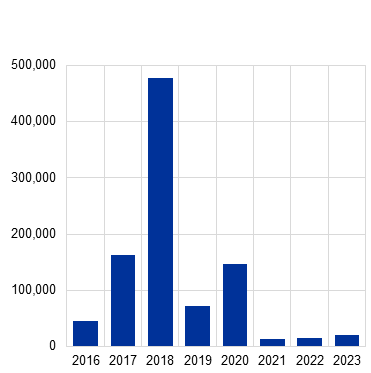
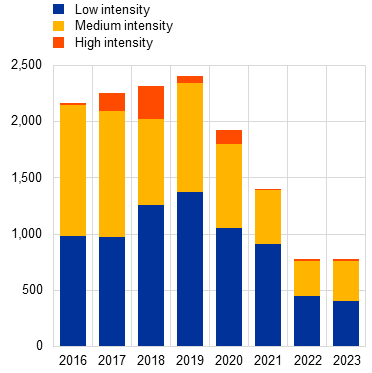
To identify tariff increases and account for potential asymmetries, a distinction is made between low-, medium- and high-intensity tariff increases. Bilateral product-level trade policy data from the Global Trade Alert database are used to measure tariff increases.[8] Their distribution is very skewed: for more than 90% of observations, no tariff increases occurred in a given year. Actual tariff increases are classified into three categories according to their distribution: a low-intensity tariff increase corresponds to up to the 95th percentile of the distribution (one to three product-level tariff increases within one year). A medium-intensity tariff increase corresponds to the 96th to the 99th percentile of the distribution (between four and 1,541 product-level tariff increases in a year). Finally, bilateral product-level tariff increases at the 100th percentile (more than 1,541 in a given year) are classified as high-intensity tariff increases. Over the sample period, the number of tariff measures peaked in 2018 (Chart 1, panel a). More than half of all country pairs experienced low-intensity tariff increases, whereas medium-intensity cases were less frequent and high-intensity shocks were rare, mainly observed in 2018 (Chart 1, panel b).
Chart 1
Number of tariff increases at product level and intensity across country pairs
a) Tariffs at product level | b) Tariff-increase intensity across country pairs |
|---|---|
(sum of bilateral tariff increases at product level by year) | (count of bilateral country relationships) |
 |  |
Sources: Global Trade Alert and ECB calculations.
Notes: Panel a) shows the sum of all bilateral tariff increases at the product level, aggregated by year. Panel b) shows the intensity of bilateral tariff increases in each year, with each country pair counted as one observation for that year. Tariff increases are classified according to their distribution, with a low-intensity tariff increase being up to the 95th percentile, a medium-intensity tariff increase being between the 96th and the 99th percentile, and a high-intensity tariff increase corresponding to the 100th percentile of the distribution.
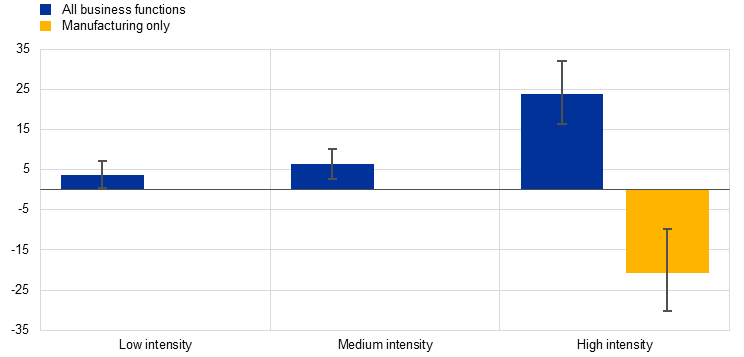
Our findings show that, overall, tariff increases are associated with a rise in greenfield FDI announcements, supporting the idea that firms respond to trade barriers by investing in the tariff-increasing country (Chart 2). Tariff increases are associated with a rise in overall greenfield FDI projects into the tariff-increasing country, suggesting that tariff-jumping motives dominate in the aggregate figure. A low-intensity tariff increase leads to a rise in announced greenfield FDI projects of around 4% in the following year. A medium-intensity tariff increase boosts the number of announced greenfield FDI projects by, on average, around 6%, and a high-intensity tariff increase pushes the number of announced greenfield FDI projects up by, on average, around 24%, both the year before the actual tariff increase as well as the year following the actual tariff increase, pointing to anticipatory effects or announcement effects.[9]
Chart 2
Impact of tariff increases on number of announced greenfield FDI projects
(semi-elasticities, percentages)
Source: ECB calculations.
Notes: The chart displays estimated semi-elasticities derived from Poisson Pseudo Maximum Likelihood coefficients of regressions linking the number of greenfield FDI projects to tariff-increase dummies. Semi-elasticities are computed from the estimated coefficients to represent the percentage change in the expected number of new FDI projects associated with a tariff increase. Results are shown separately for projects in all business functions (blue bars) and for manufacturing projects only (yellow bar). Positive coefficients indicate that higher tariffs are associated with an increase in project numbers (consistent with tariff-jumping behaviour), whereas negative coefficients imply a decline in project numbers (consistent with efficiency-seeking motives). Only values that are statistically significant with a confidence level of at least 90% are displayed. Error bars indicate the respective 90% confidence interval.
However, the direction of the impact reverses when focusing on manufacturing FDI only. The dataset of greenfield FDI announcements provides information on the business function of each project, defined as the activity to be carried out at the new facility, once completed. Since manufacturing is an investment category that policymakers often prioritise, the previous analysis is repeated but with a focus on manufacturing projects only. While the impact of low- and medium-intensity tariff increases becomes insignificant, the direction of the impact of high-intensity tariff increases reverses and becomes highly negative, with a fall in announced projects of around 21% in the same year as the tariff increase takes place (Chart 2, yellow bar).[10] The results therefore suggest that tariff increases are ineffective at boosting manufacturing greenfield FDI and may even deter it when protectionism becomes intense, highlighting the importance of input costs and vertical linkages in global value chains, especially for manufacturing.[11]
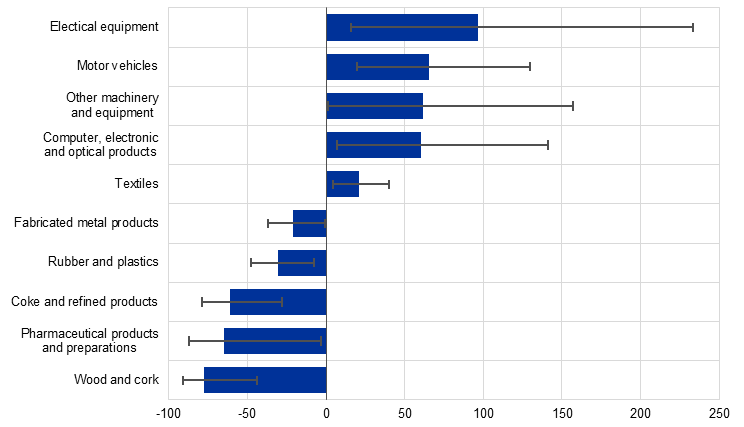
Distinguishing between the impact of tariffs on greenfield FDI in individual manufacturing sectors suggests considerable heterogeneity (Chart 3). Using a gravity equation again, the impact of tariff increases on individual sectors within the manufacturing sector is assessed.[12] The sectoral results reveal substantial heterogeneity in how tariffs affect greenfield FDI across sectors. Specifically, positive effects are found for textiles, motor vehicles, computers, electrical equipment and machinery. With the exception of textiles manufacturing, these sectors tend to produce final goods. Their relatively flexible production models may make tariff-jumping investment an attractive strategy, prompting firms to relocate to or expand operations within the tariff-imposing country. By contrast, several sectors show a negative FDI response to tariffs, including wood, refined petroleum products, rubber and plastic products, fabricated metals and pharmaceuticals. Many of these industries are upstream in the production chain and produce intermediate inputs. Their capital-intensive nature and – in some cases – limited orientation towards local consumer markets may reduce the appeal of locating production in tariff-imposing countries.
Chart 3
Impact of tariff increases on the number of greenfield FDI projects by manufacturing sector
(semi-elasticities, percentages)
Source: ECB calculations.
Notes: The chart reports estimated semi-elasticities derived from Poisson Pseudo Maximum Likelihood coefficients of sector-specific regressions. Each bar shows the estimated percentage change in the announced number of greenfield FDI projects in a given manufacturing sector following a tariff increase. Positive elasticities indicate that higher tariffs are associated with an expansion in FDI projects (tariff-jumping), whereas negative elasticities indicate a contraction in investment (efficiency-seeking). Only values that are statistically significant with a confidence level of at least 90% are displayed. Error bars indicate the respective 90% confidence interval.
Overall, the relationship between tariffs and greenfield FDI is complex and nuanced, influenced, among other things, by the intensity of tariff measures and the sectoral composition of investment. The observed rise in greenfield FDI projects aligns with the findings in Box 1, which suggests that horizontal FDI aimed at serving local markets may substitute for exports. However, the decline in manufacturing FDI following high-intensity tariff increases underscores the importance of input costs and global supply chains. While global data suggest that tariffs may encourage greenfield FDI overall, these dynamics vary significantly across sectors and tariff levels.[13] To explore these dynamics further, the next section describes in detail US inward and outward FDI following the 2025 tariff announcements under President Trump’s second term.
Box 1
The trade-foreign direct investment nexus revisited
The trade-foreign direct investment (FDI) nexus is a cornerstone of international economics and it provides insight into how globalisation, multinational enterprises and cross-border production shape trade patterns, growth and development.
As highlighted in the introduction, firms face a “proximity-concentration trade-off” in terms of deciding between exporting or FDI based on factors such as costs, risks and market conditions. While exporting can help to minimise fixed costs and risks, FDI can become more attractive for high trade barrier markets, thereby encouraging “tariff jumping”, or for larger markets. Trade and FDI can complement each other when production is fragmented across borders, driving higher trade volumes and fostering interconnected global supply chains.[14]
Understanding this dynamic is crucial for grasping the broader implications of globalisation and international economics. This box provides new empirical evidence showing that the trade-FDI relationship is systematically related to the market size of and the distance to the host country, which proxy, respectively, economies of scale and transport costs.
The analysis examines how bilateral trade responds over time to changes in greenfield FDI. Using local projection methods within a gravity-type framework, it estimates the dynamic effect of greenfield FDI on exports over horizons from 0 to 4 years ahead. For each horizon, exports are regressed on their own past values (to capture persistence in trade), on bilateral greenfield FDI announced projects, on the economic size of both countries, and on interactions between greenfield FDI and (i) geographical distance (distance between main cities, proxying transport costs) and (ii) economic size (proxying the scope for economies of scale).[15]
In this setting, the coefficients of greenfield FDI measure the average elasticity of bilateral trade relative to greenfield FDI at each horizon and the interaction terms show how this elasticity varies with distance and the market size of the recipient country.
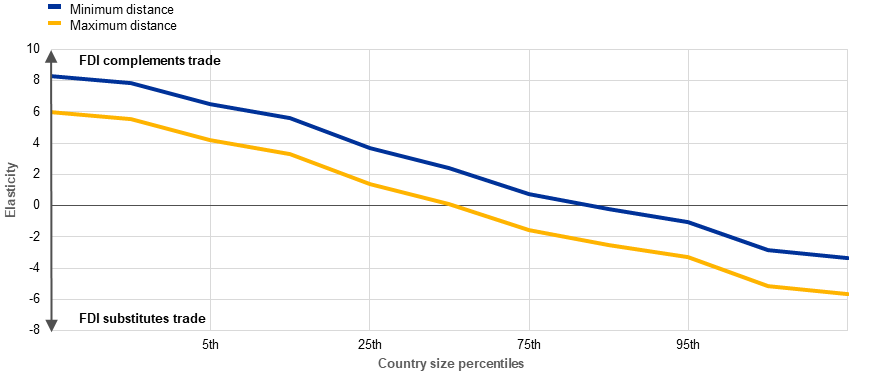
The results indicate that the relationship between trade and FDI depends on the distance to and the size of the market and that these factors become significant one year after the investment is made. Evidence indicates that for small and nearby destinations, where vertical FDI and supply-chain integration are more common, outward greenfield FDI and trade typically complement each other, as new investment tends to raise trade levels in intermediates. For large and distant destinations, outward greenfield FDI and trade tend to be substitutes, suggesting that in these instances, FDI is more geared towards serving local markets. Specifically, for geographically close partner countries, the complementarity between trade and outward greenfield FDI transforms into substitutability once the recipient economy exceeds roughly the 80th percentile of the global size distribution. For very distant partners, this turning point occurs already around the median size (Chart A).
Chart A
Bilateral trade elasticity relative to greenfield FDI by economic size of the recipient country for very close and very distant trading partners
(percentages)
Sources: ECB, IMF, FT intelligence and ECB calculations.
Notes: The chart illustrates how bilateral trade in year t+1 responds to outward bilateral greenfield FDI in year t, based on the economic size of the recipient country. The vertical axis represents the elasticity of bilateral trade relative to greenfield FDI and the horizontal axis represents the recipient country’s economic size. The blue line shows bilateral trade elasticity for geographically close partner countries, calculated using the minimum bilateral distance across all country pairs. The yellow line shows the same elasticity for distant partner countries, calculated using the maximum bilateral distance across all country pairs. The area between the blue and yellow lines represents the range of possible bilateral trade elasticities in relation to greenfield FDI, influenced by both economic size and the bilateral distance between the two countries’ main cities.
For the United States — a large and geographically distant market from the euro area — the evidence points to trade substitutability. An increase in euro area outward greenfield FDI to the United States of the magnitude observed between 2021 and 2025 (i.e. more than doubling the original size) is estimated to reduce euro area exports to the United States by around 4% in the following year.
In August 2025, the EU pledged to increase its investment in the United States by USD 600 billion by 2028, in addition to an existing stock of bilateral FDI of around USD 5 trillion. If interpreted narrowly as additional EU greenfield FDI to the United States, and considering historical patterns (Chart 11), the headline figures in the EU-US framework agreement might appear rather ambitious. This agreement would require the EU greenfield FDI to the United States between 2025 and 2028 to average more than twice the peak level seen in 2024. However, even a smaller but sustained increase in outward greenfield FDI to the United States would meaningfully reshape the composition of euro area external activity.
A rebalancing from serving the US market through exports to serving it via local production would have mixed implications for the euro area economy. Lower exports to the United States would mechanically reduce euro area GDP, as fewer goods and services for the US market are produced domestically. At the same time, euro area firms would benefit from lower tariff burdens and higher profits from foreign operations; and if these profits are repatriated, they would support gross national income.
2 US inward and outward foreign direct investment following the 2025 US tariff announcements
During his second term, President Trump has been implementing broad-based tariff measures as a means of encouraging manufacturing production in the United States and of attracting greenfield FDI. In his speech on 2 April 2025, announcing new tariffs, President Trump declared that “if you want your tariff rate to be zero, then you build your product right here in America” (Trump, 2025). Official statements from his administration framed tariffs as an instrument for attracting foreign investment, particularly greenfield manufacturing FDI, by shifting the incentives of firms away from exporting and towards local production. However, the descriptive evidence available so far does not indicate a clear tariff-induced surge in inward investment into the United States.
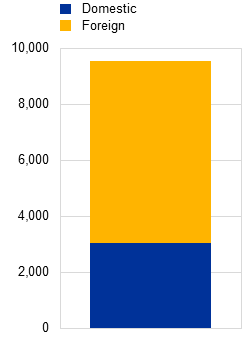
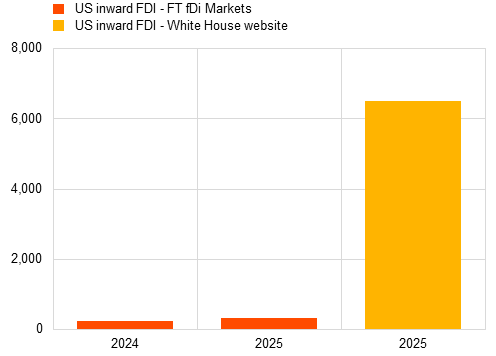
Reported aggregate investment commitments cited in official White House communications exceed the levels of announced inward greenfield FDI recorded in project-level data. Official communications by the White House report cumulative investment commitments of USD 9.6 trillion since the beginning of President Trump’s second term, referring to “major investment announcements”, with a significant share attributed to foreign investment (Chart 4, panel a). However, the White House website does not provide a detailed methodological breakdown of how these aggregates are compiled or which categories of trade flows are included. The published figures are presented at the aggregate level and do not explicitly distinguish between greenfield FDI and other types of commitment. In addition, some announcements may relate to multi-year projects, previously announced investment plans, or broader commercial agreements. In certain cases, reported “deals” may be associated with purchases of US goods, which could affect exports rather than domestic fixed investment. This makes it difficult to establish a direct correspondence between headline commitments and standard measures of inward greenfield FDI. By contrast, the fDi Markets database records announced greenfield FDI projects at the firm level on a consistent and internationally comparable basis. When focusing exclusively on greenfield FDI, as defined in the dataset, inward investment appears to be substantially lower than the headline commitments reported in official communications (Chart 4, panel b).
Chart 4
US inward greenfield FDI announcements in 2025
a) Official US domestic and foreign investment announcements in 2025 | b) US inward greenfield FDI announcements made by the US government and by fDi Markets |
|---|---|
(USD billions) | (USD billions) |
 |  |
Sources: FT fDi Markets, White House website and ECB staff calculations.
Notes: Panel a) shows investment into the United States in 2025, as announced on the official White House website. Panel b) compares US inward greenfield FDI announcements in the FT fDi Markets database (red bars) with that announced on the official White House website (yellow bar). The latest observations are for December 2025.
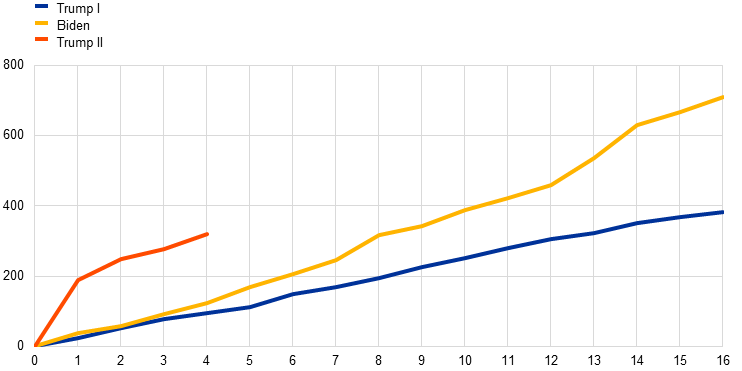
US inward greenfield FDI under President Trump’s second term has so far outpaced that recorded under other recent US administrations. Despite the gap between White House headline announcements and investments as measured by the fDi Markets database, US inward greenfield FDI remained elevated relative to comparable periods under previous presidents (Chart 5). Investment under President Biden’s term accelerated from the second year onwards, likely reflecting policy initiatives such as the CHIPS Act and the Inflation Reduction Act, which supported advanced manufacturing and green technologies. However, the pace of increase observed during President Trump’s second term has so far been more pronounced.
Chart 5
US inward greenfield FDI announcements within each US presidential term
(y-axis: USD billions; x-axis: quarters)
Sources: FT fDi Markets and ECB staff calculations.
Notes: The chart shows developments in US inward greenfield FDI announcements, cumulative since the start of each US presidency. The latest observations are for December 2025.
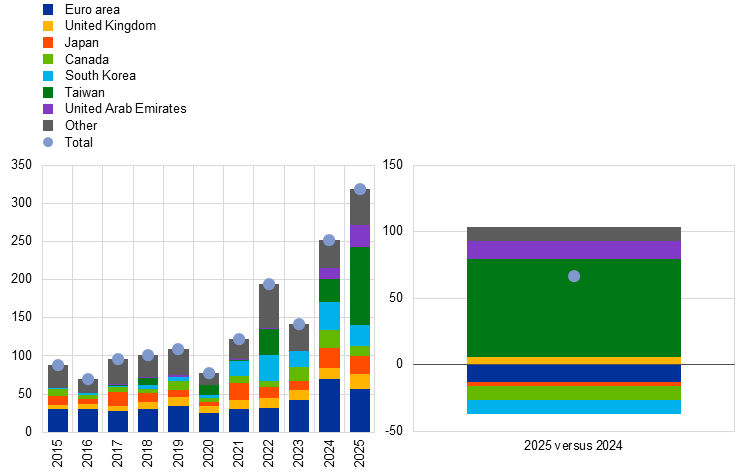
The recent increase in announced FDI is narrowly concentrated in a small number of countries and projects. While the total value of announced FDI projects in 2025 exceeds that recorded in 2024, the increase is highly concentrated. Nearly half of the announced investments in 2025 originate from Taiwan, with commitments made by the Taiwan Semiconductor Manufacturing Company serving as the main driver of the year-on-year change (Chart 6). Part of this rise also reflects higher investment by the United Arab Emirates, whereas announced investment by the euro area and other G7 countries declined.
Chart 6
US inward greenfield FDI announcements by source country
(USD billions)
a) Annual US inward greenfield FDI | b) Change in annual US inward greenfield FDI |
|---|---|
 | |
Sources: FT fDi Markets and ECB calculations.
Notes: Both panels show the country decomposition of US inward FDI flows. The latest observations are for December 2025.
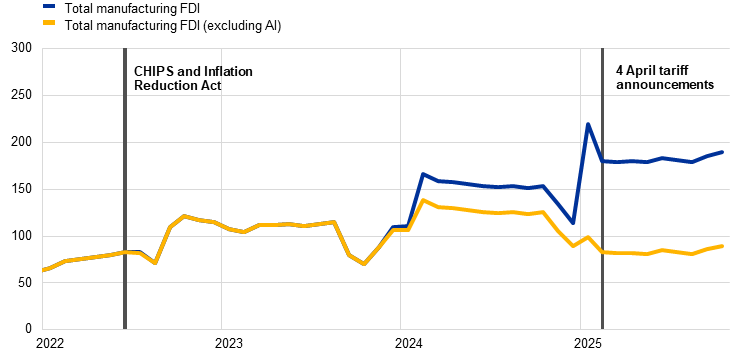
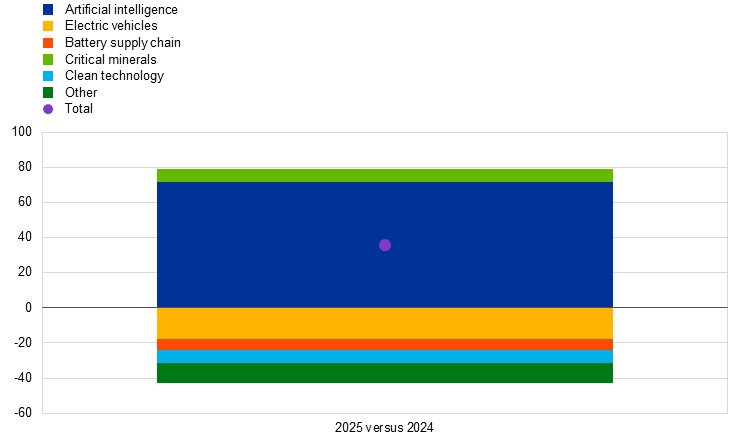
US inward greenfield manufacturing FDI shows little evidence of a tariff-induced surge, with recent increases coinciding with strong AI-related investment trends. Judging by manufacturing projects alone, the primary target of the US administration’s tariff strategy, there is little support for the existence of a tariff-driven investment boom. Announced manufacturing investment briefly peaked in March 2025, ahead of the major US tariff announcements, but this rise appears to have been driven mainly by investment in AI-related business. Such investment is only weakly linked to trade policy and is more plausibly explained by the global AI demand cycle (Chart 7, panel a). Outside this sector, rare minerals are the only other industry that is currently contributing meaningfully to recent growth. By contrast, greenfield manufacturing FDI in electric vehicles, battery supply chains and clean technologies, which partly also drove euro area manufacturing greenfield FDI to the United States until 2024, partially in connection with policy incentives such as the CHIPS and Science Act and the Inflation Reduction Act, declined (Chart 7, panel b).[16]
Chart 7
US inward greenfield manufacturing FDI announcements
a) US inward greenfield manufacturing FDI and the role of AI investment
(USD billions)
b) Change in annual US inward greenfield manufacturing FDI by sector
(USD billions)
Sources: FT fDi Markets and ECB calculations.
Notes: The chart depicts US inward greenfield FDI with manufacturing as a business function. The latest observations are for December 2025.
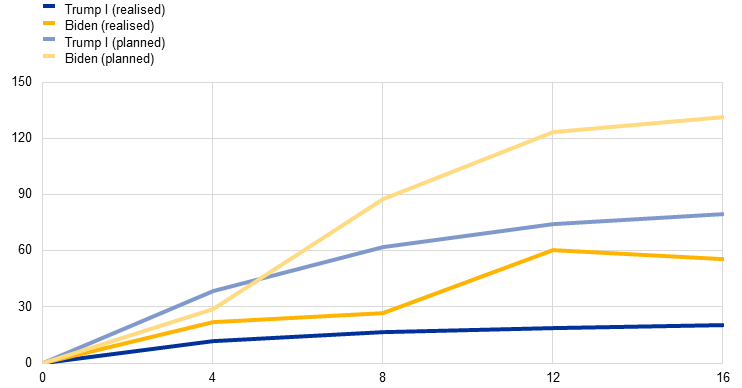
An important caveat is the large and persistent gap between announced and realised inward greenfield FDI. Only a small share of announced inward greenfield FDI projects ultimately translates into realised investment within each presidential term (Chart 8). The US Bureau of Economic Analysis provides a consistent basis for comparing planned (announced) and realised investment. While planned FDI rose steadily under both previous administrations, realised investment increased at a much slower pace. This disconnect suggests that announcement-based measures of investment, such as those announced by fDi Markets, may overstate near-term investment outcomes and should therefore be interpreted with caution when assessing the effectiveness of tariff policy incentives.
Chart 8
Planned and realised greenfield FDI within each US presidential term
(y-axis: USD billions; x-axis: quarters)
Sources: US Bureau of Economic Analysis and ECB calculations.
Notes: Planned FDI refers to greenfield FDI that it is initiated and planned to be realised within each president’s term. Realised FDI similarly refers to greenfield FDI that was initiated and realised within the respective term.
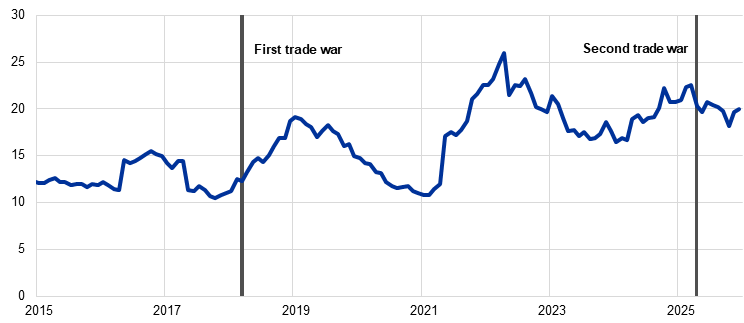
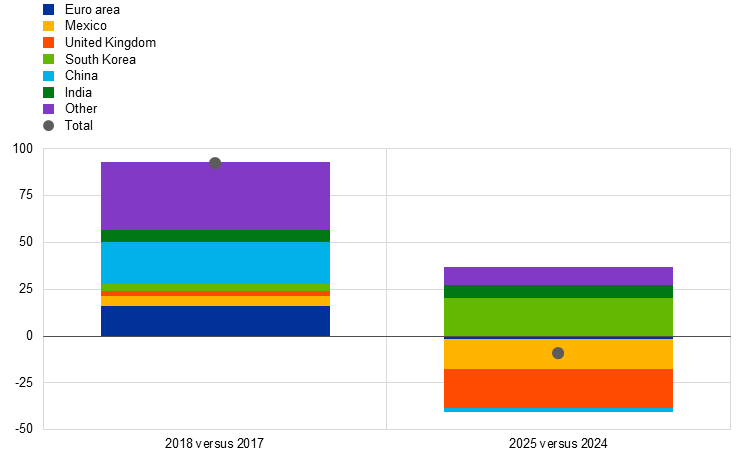
US outward investment grew more slowly in 2025 than in 2018. In theory, the effect of US tariffs on outward FDI is similarly ambiguous as that on inward FDI. On the one hand, higher trade costs due to intermediate goods trade may induce firms to substitute exports with local production abroad. On the other hand, higher input costs, heightened uncertainty and compressed profit margins may weaken the incentives and capacity of firms to expand overseas.[17] Focusing solely on manufacturing FDI, following the first round of US tariff measures in 2018, US outward manufacturing FDI increased substantially, whereas the opposite pattern emerged during the second round of measures (Chart 10, panel a). One possible explanation is that the second round of measures was marked by greater trade policy uncertainty and it involved a broader set of targeted countries, which may have led firms to postpone or scale back foreign expansion plans rather than reallocate production abroad.[18] After 2018, the increase in US outward FDI was relatively broad-based across destination countries, including China — the primary target of US tariffs (Chart 9, panel b). By contrast, the 2025 pattern in US outward FDI is less clear-cut. Although the euro area remains the largest destination for US FDI with stable flows in 2025, the most pronounced increases in 2025 were directed towards South Korea and India, with investment concentrated in digital infrastructure, particularly data centres and cloud computing, as well as selected high-tech manufacturing activities such as semiconductors and electronic components.
Chart 9
US outward greenfield manufacturing FDI announcements
a) US outward greenfield manufacturing FDI
(USD billions, 12-month moving average)
b) Annual change in US outward greenfield manufacturing FDI by country
(USD billions)
Sources: FT fDi Markets and ECB calculations.
Note: The latest observations are for December 2025.
Box 2
Does outward foreign direct investment crowd out domestic investment in the euro area?
Outward foreign direct investment (FDI) can affect domestic investment activity, i.e. fixed capital formation, in the euro area through several channels. First, outward FDI can affect domestic investment through financial channels, particularly in euro area countries with low national savings. Relocation can initially lower profits of parent companies or it can tighten the financial conditions of those parent companies. Second, outward FDI, as firms shift part of their production abroad, can reduce domestic capital expenditure. Therefore, on the one hand, purely market-seeking outward FDI may dampen domestic investment activity if firms shift most of their production activity to serve the foreign market, as would be the case if firms were to build up production capacity in the United States in order to avoid higher tariff rates. On the other hand, efficiency-seeking FDI that relocates a part of the production chain abroad to take advantage of lower production costs can generate exports of intermediates and capital goods or services for the foreign market and, in general equilibrium, stimulate domestic investment. This may also be the case for outward FDI that targets strategic assets, as it can facilitate technology and knowledge transfer and thereby increase the productivity of firms.
Empirically, the long-run relationship between outward FDI and domestic investment can be gauged from cointegration analysis, as in Herzer and Schrooten (2008). To this end, cointegration tests on domestic investment and outward FDI (both as shares of GDP) are performed on annual data for the period 1975-2024 obtained from the World Bank for the euro area as well as for individual euro area countries. The estimation is based on total FDI asset flows from the balance of payments to ensure a sufficiently long sample for which data on greenfield FDI are not available. Once cointegration is established, the long-run effect of outward FDI on domestic investment is estimated using a single equation error correction model.
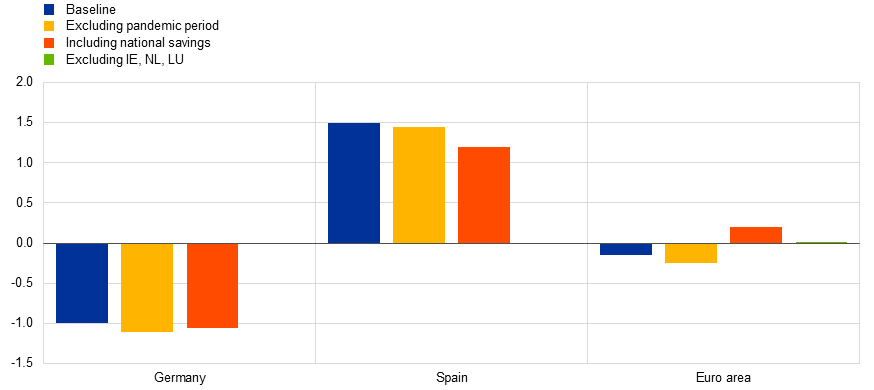
The empirical evidence suggests that, for the euro area as a whole, there is no clear link between domestic investment and FDI, although this masks heterogeneity across individual euro area countries. Specifically, the analysis suggests that there is no statistically significant link at the euro area aggregate level, even when excluding countries for which financialised flows may bias aggregate outward FDI (Chart A). However, this aggregate result masks heterogeneity across the larger euro area countries. While no significant long-run relationship is found for France and Italy, the analysis suggests that outward FDI and domestic investment are substitutes in Germany but complements in Spain. For Germany, these findings are in line with Herzer and Schrooten (2008), who also document long-run substitution effects reflecting a dynamic adjustment path. Initial foreign investment may require domestic capacity-building and may boost domestic investment in the short run (as also documented in Goldbach et al., 2019), but once foreign affiliates become established, they replace domestic production, reducing long-run domestic capital formation. These findings are also robust to the exclusion of the COVID-19 pandemic period and to controlling for aggregate national savings.
Chart A
Long-run multiplier coefficients of outward FDI flows for domestic investment
(elasticities)
Sources: Eurostat and ECB calculations.
Notes: The chart shows estimated long-run multiplier coefficients for the effects of outward FDI flows on domestic investment based on a single error correction model in line with Herzer and Schrooten (2008). “Including national savings” refers to aggregate national savings over GDP as an additional control variable. “Excluding IE, NL, LU” refers to estimates for the euro area excluding countries in which FDI flows may be more distorted by financialised flows. IE stands for Ireland, NL stands for the Netherlands, and LU stands for Luxembourg.
The heterogeneous relationship between FDI and domestic investment plausibly reflects differences in the nature and sectoral composition of outward FDI. Outward FDI from Spain, in particular in Latin America, is focused on financial and insurance activities, information and communication and extractive industries. This investment is therefore largely market-expanding and directed towards non-tradable sectors, potentially supporting domestic investment through the provision of additional services and research and development activities in the firms’ headquarters and with potential spillovers to firm productivity and competitiveness. By contrast, outward FDI from Germany is concentrated in the build-up of manufacturing capacity abroad, first in central and eastern Europe and later in China, which may substitute for domestic industrial output and exports. Indeed, the share of gross output produced abroad amounted to around 26% of Germany’s GDP in 2019, roughly double the corresponding share for Spain, at around 13%. This suggests that increased foreign investment in the United States to build productive capacity for the local market to avoid higher tariffs would likely have a dampening effect on domestic investment in euro area countries, especially for countries with significant exports of industrial goods to the United States.
3 Potential consequences of tariff-induced changes in outward foreign direct investment for the euro area
The potential for new tariffs to lead to structurally higher euro area outward FDI has important implications for euro area macroeconomic developments. Tariff increases are, on average, associated with higher greenfield FDI announcements, particularly when firms use investment as a way to bypass new trade barriers. This has potential repercussions for euro area trade and domestic investment.
Higher tariffs on imports from the euro area by the United States – a large and geographically distant market – could potentially lower euro area exports. The bilateral trade-FDI relationship crucially depends on the size of the country and its distance. For small and medium-sized nearby economies, outward greenfield FDI and exports tend to be complementary, i.e. investment abroad supports additional cross-border trade in intermediate and final goods. By contrast, for larger and more distant economies, FDI tends to substitute for exports (Box 1).
Higher tariffs applied to euro area exports that encourage firms to build productive capacity abroad through FDI can also affect euro area domestic investment. In particular, purely market-seeking outward FDI may dampen domestic investment activity if firms shift most of their production activity to serve the foreign market, whereas FDI in non-tradable sectors may acts as a complement to domestic investment as firm’s businesses expand (see Box 2).
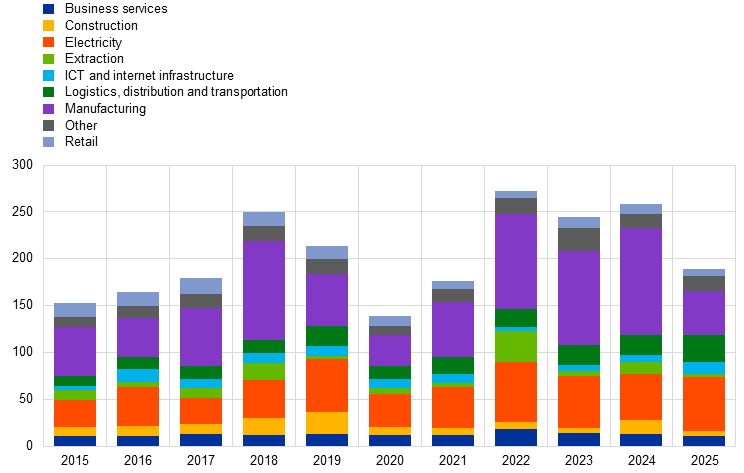
Challenges stemming from tariff-induced changes in euro area outward FDI seem contained. The available data show that euro area outward greenfield FDI declined in 2025. The decline in outward greenfield FDI was largely due to manufacturing FDI (Chart 10). A substantial portion of this decline was accounted for by a decrease in outward manufacturing FDI into the United States, in line with the empirical findings presented in Section 3 (Chart 11). The concentration of euro area greenfield FDI in the United States in global value chain-reliant manufacturing therefore indeed seems to mitigate the risk of a crowding-out of euro area exports and domestic investment. Moreover, continued strong outward greenfield FDI into market-expanding investment in the non-tradable sector, such as AI-related investments in the electricity sector, may even act as a complement to euro area domestic investment.
Chart 10
Outward euro area greenfield FDI by business function
(USD billions)
Sources: FT fDi Markets and ECB calculations.
Note: The latest observations are for December 2025.
Chart 11
Outward euro area greenfield FDI into the United States by business function
(USD billions)
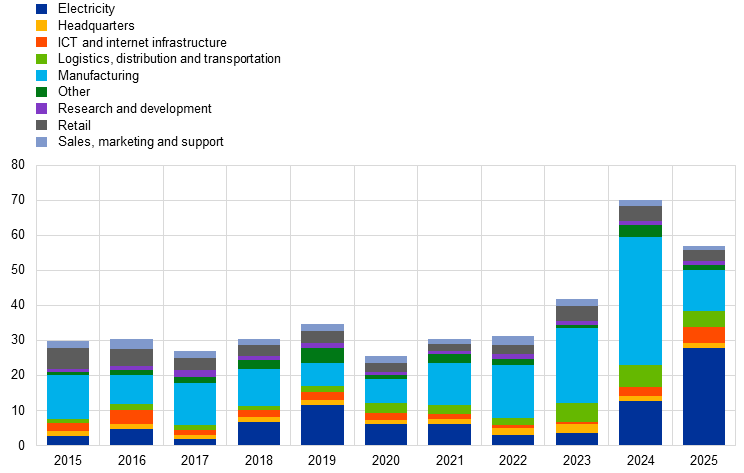
Sources: FT fDi Markets and ECB calculations.
Note: The latest observations are for December 2025.
4 Conclusions
The impact of tariffs on greenfield FDI is complex and depends on the primary motives for investing abroad. The analysis presented in this article shows that while tariffs can encourage overall greenfield FDI through tariff-jumping motives, their impact on manufacturing FDI is different. High-intensity tariff measures tend to deter investment in manufacturing sectors that rely on intermediate inputs and are vertically integrated into global supply chains, highlighting the challenges of using protectionist policies to drive investment in key industries. Moreover, sectoral heterogeneity plays a critical role in determining how FDI responds to tariffs. Positive FDI responses are concentrated in sectors directed toward local markets, such as motor vehicles, whereas upstream industries, such as pharmaceuticals and fabricated metals, experience negative effects.
The most recent experience of US tariffs illustrates the limits of tariff-induced investment strategies. Despite ambitious policy goals and official claims of surging inward FDI under President Trump’s second term, data reveal significant gaps between announced and realised investment, with only a small share of announced greenfield FDI projects translating into actual investment within a given presidential term. Moreover, tariff-driven FDI was narrowly concentrated in specific industries and countries, such as AI-related manufacturing and FDI from economies such as Taiwan.
The structure of euro area FDI suggests that tariff-induced changes in euro area outward FDI might be rather limited and that associated risks to the euro area economy remain contained. Rising protectionism and tariff-induced investment flows may pressure euro area firms to invest abroad to circumvent trade barriers, with potentially heterogeneous effects on domestic investment across countries. However, the risk that increased FDI in the United States to build productive capacity for the local market could lower domestic investment in the euro area is limited. This is because euro area outward greenfield FDI into the United States is concentrated in the manufacturing sector, which is likely to react negatively to higher tariffs due to its reliance on global value chains, and such investment in the manufacturing sector indeed fell in 2025.
References
Amiti, M., Redding, S.J., & Weinstein, D.E. (2019), The impact of the 2018 tariffs on prices and welfare, Journal of Economic Perspectives, Vol. 33, No 4, pp. 187-210.
Caldara, D., Iacoviello, M., Molligo, P., Prestipino, A., & Raffo, A. (2020), The economic effects of trade policy uncertainty, Journal of Monetary Economics, Vol. 109, pp. 38-59.
Cole, M.T. & Davies, R.B. (2011), Strategic tariffs, tariff jumping, and heterogeneous firms, European Economic Review, Vol. 55, No 4, pp. 480-496.
Boeckelmann, L., Emter, L., Moder, I., Pongetti, G., & Spital, T. (2024), “Geopolitical fragmentation risks and foreign direct investment”, Economic Bulletin, Issue 7/2024.
Handley, K., & Limão, N. (2017), Policy Uncertainty, Trade, and Welfare: Theory and Evidence for China and the United States, American Economic Review, Vol. 107, No 9, pp. 2731-2783.
Helpman, E., Melitz, M.J., & Yeaple, S.R. (2004), Export Versus FDI with Heterogeneous Firms, American Economic Review, Vol. 94, No 1, pp. 300-316.
Herzer, D., & Schrooten, M. (2008), Outward FDI and domestic investment in two industrialized countries, Economics Letters, Vol. 99, No 1, pp. 139-143.
Goldbach, S., Nagengast, A.J., Steinmüller, E., and Wamser, G. (2019), The effect of investing abroad on investment at home: On the role of technology, tax savings, and internal capital markets, Journal of International Economics, Vol. 116, pp. 58-73.
Moder, I. & Spital, T. (2025), The protectionist gamble: How tariffs shape greenfield foreign direct investment, Working Paper Series, No 3144, European Central Bank.
Trump, D. J. (2025), Remarks Announcing Additional United States Tariff Actions on Foreign Imports, White House, Washington D.C., 2 April.
For example, high trade barriers were used in the period between the 1950s and the 1980s when Brazil and India pursued import substitution and when sector-specific market protection was enforced by China in the 1990s and 2000s. US trade measures, such as the voluntary export restraints in the 1980s and the Section 232 and 301 tariffs introduced in 2018, were used to encourage local production by foreign firms.
Recent evidence suggests that rising geopolitical fragmentation is increasingly reshaping global patterns of foreign direct investment (FDI), with firms redirecting investment towards geopolitically aligned countries. See also Boeckelmann et al. (2024).
Greenfield FDI flows refer to foreign investments made by companies to build new or extend existing production capacity. As such, they are arguably the component most closely associated with real economic developments and therefore are of particular interest for policymakers. By contrast, cross-border mergers and acquisitions involve ownership changes, such as acquisitions, divestitures and corporate restructurings, and have less of a direct economic impact.
The analysis is primarily based on a dataset provided by fDi Markets. The data are collected mostly from publicly available sources (e.g. media outlets, industry organisations and investment-promoting agency newswires) and they report investment-level information for over 300,000 greenfield FDI announcements between 186 countries starting in January 2003.
See Brainard, S. Lael (1997), “An Empirical Assessment of the Proximity-Concentration Trade-off Between Multinational Sales and Trade”, American Economic Review, Vol. 87, No 4, pp. 520-544. See Markusen, James R. (1995), “The Boundaries of Multinational Enterprises and the Theory of International Trade”, Journal of Economic Perspectives, Vol. 9, No 2, pp. 169-189. See Markusen, James R. and Keith E. Maskus (2002), “Discriminating Among Alternative Theories of the Multinational Enterprise”, Review of International Economics, Vol. 10, No 4, pp. 694-707.
Technical details of the regression framework can be found in Moder and Spital (2025).
In addition, the regressions include origin-time, destination-time, and country-pair fixed effects to account for unobserved heterogeneity. For example, origin-time and destination-time fixed effects capture macroeconomic drivers of FDI such as GDP growth, while country-pair fixed effects account for time-invariant bilateral characteristics such as distance or common language.
Publicly available data sources on tariff schedules, such as the World Integrated Trade Solution, have significant limitations, as they fail to record bilateral tariff rates when changes are temporary, politically motivated, or implemented under national trade laws, which was the case under President Trump’s first term. Therefore, in the absence of effective tariff rates, the incidence of tariff increases is counted across products.
If no distinction is made between the intensity of tariff increases, i.e. if the same dummy is used for all types of tariff increases, the model suggests that a tariff increase leads to a rise in announced greenfield FDI projects of around 4% both the year before the tariff increase as well as the year following the tariff increase.
If no distinction is made between the intensity of tariff increases, i.e. if the same dummy is used for all types of tariff increases, no statistically significant results are yielded for the impact on announced greenfield FDI manufacturing projects.
The impact of tariff increases on FDI projects associated with business functions other than manufacturing (e.g. example sales, marketing and support; business services; retail; research and development; logistics, distribution and transport or construction) is generally positive or insignificant. One exception is FDI projects in the construction sector, where the impact of tariff increases is even more negative than for the manufacturing sector.
Because the number of sector-level tariff increases is limited, it is not possible to differentiate between tariff intensities. Instead, a single binary indicator is used, which equals one if at least one bilateral tariff increase occurred in the respective sector during a given year.
Industry-specific structural factors that can vary over time also shape the tariff-FDI relationship. For instance, the size of production margins, the ability to absorb part of the tariff and the magnitude of sunk investment costs versus those of tariffs influence the decisions of firms on whether to undertake tariff-jumping.
Blonigen (2001) shows that US FDI in Japan substituted for US exports when trade costs were high. Brainard (1997) confirms the existence of “proximity-concentration trade-off”. Lendle et al. (2016) argue that e-commerce could weaken the trade-FDI nexus by reducing the need for physical presence in foreign markets.
The estimation controls for origin-destination fixed effects, total outflows and inflows of FDI and inflows of greenfield FDI. The methodology allows for heteroscedasticity and autocorrelation in the errors, the sample covers all aggregate country-pair relationships over 2004-24.
The CHIPS and Science Act, adopted in August 2022, provided federal subsidies and tax incentives to support semiconductor manufacturing and research in the United States, while the Inflation Reduction Act, also adopted in August 2022, introduced fiscal incentives aimed at promoting clean energy, electric vehicle production and domestic manufacturing.
See also Helpman et al. (2004) and Amiti et al. (2019).
See also Handley and Limão (2017) and Caldara et al. (2020).