


- SPEECH
Panel remarks about the European economy during a discussion on the global economic outlook at the World Economic Forum
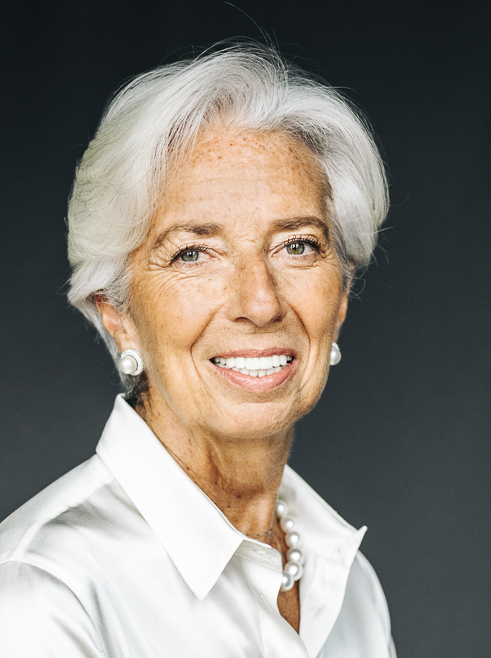
Panel remarks by Christine Lagarde, President of the ECB, at the International Business Council of the World Economic Forum
Geneva, 19 August 2026
Europe’s post-war growth model rested on three mutually reinforcing pillars. Today, all three are weakening as the international environment changes.
The first pillar was expanding global trade.
Europe became one of the world’s most open economies – roughly twice as open to trade as the United States – and benefited greatly from globalisation.[1] But expanding trade can no longer be taken for granted. Last year alone, more than 2,500 trade restrictions were implemented globally.[2]
The second pillar was Europe’s strength in mid-tech manufacturing, supported in part by access to relatively cheap energy.
That advantage is also being eroded. China has been steadily moving up the value chain. The country now competes directly with the euro area in close to 40% of the sectors in which we have a comparative advantage, compared with around 25% in the early 2000s.[3]
And the cheap energy on which European industry once relied – including that from Russian gas – has faded. Last year, EU electricity prices for energy-intensive industries were on average more than twice US levels and around 50% above those in China.[4]
The third pillar was a stable, rules-based global order, underpinned by a US security umbrella. That environment allowed European supply chains to deepen, and enabled firms to organise investment around efficiency rather than resilience.
Today, that global order is under pressure. Geopolitical tensions are bringing critical dependencies and chokepoints into sharper focus, while Europe faces growing security threats on its doorstep.
When economic dependencies can be weaponised or when perceptions of deterrence weaken, concerns about resilience enter economic decisions directly. Firms invest less when capital is seen as less safe, weighing on output and consumption.[5]
Taken together, these shifts suggest that Europe’s post-war growth model is eroding. And it is unlikely to return to the form we once knew.
But Europe still has substantial strengths to build on.
Even in the face of trade headwinds, the EU has the world’s largest network of trade agreements[6] – and that network is expanding, with agreements recently concluded or advanced with partners including India, Indonesia, Australia, Mexico and Mercosur.[7]
At home, we retain world-class manufacturing capabilities, including global leadership in areas such as lithography and precision optics. We have a highly skilled workforce too. In Germany, for example, 35% of bachelor’s graduates are in STEM fields – the highest share among OECD countries.[8]
And, crucially, we have an integrated market of 27 Member States and 450 million consumers – the largest among advanced economies. That market is becoming more important as the sources of growth shift.
Last year the euro area economy grew by 1.5%, driven entirely by domestic demand. In 2026 it has continued to grow despite the energy shock, with domestic demand contributing positively to the quarter-on-quarter growth of 0.4% in the second quarter of 2026.[9] Domestic demand is projected to remain the main source of growth for the euro area this year.[10]
The task now is to turn that domestic resilience into a more durable source of growth over the long run.
This requires Europe to make better use of the scale of its home market. When firms can grow across the EU, they can invest more efficiently and push innovation further. That ultimately makes them more productive.
Scale is particularly important as new technologies reshape the sources of productivity growth.
In some respects, Europe is well placed to make the most of new technologies. We have a world-class research and knowledge base. The EU accounts for around 6% of the world’s population but as many as 15% of its researchers. It also produces almost one-fifth of the world’s most-cited scientific publications.[11]
The challenge lies in turning that knowledge into commercial success and ensuring that new technologies diffuse across the economy. Too often, the barriers that prevent firms from scaling also hold back that diffusion.
We have seen the consequences before.
Europe largely missed out on the first digital revolution, as the commercial gains from the spread of information and communication technologies were captured disproportionately elsewhere. We cannot afford to repeat that experience with artificial intelligence (AI), the second digital revolution.
There are already encouraging signs that European firms are investing in AI. Survey evidence suggests that firms in the euro area expect to allocate an average of around 9% of their total investment to AI this year.[12]
The question is whether Europe can create the conditions for that investment to spread and scale. Two barriers are especially critical.
The first is fragmentation in the Single Market. Firms still compete too much within national borders, which weakens the competitive pressure to adopt new technologies.
Recent research finds that, in the euro area, a 1 percentage point rise in the perceived share of domestic competitors investing in AI raises a firm’s own expected AI investment rate by around 0.6 percentage points. But the study also finds that those competitive effects still largely stop at national borders.[13]
Removing internal barriers would allow that competitive pressure to apply across Europe.
The second barrier is fragmentation in capital markets.
Innovative European firms can often finance their early growth, but a gap tends to open as they scale. According to the European Investment Bank, EU and San Francisco-based scale-ups raise broadly similar amounts during their first five years of operations. But by the tenth year, EU scale-ups have raised roughly 50% less.[14]
Fragmented capital markets can also incentivise young, innovative firms to vote with their feet. Some 12% of EU scale-ups have relocated outside the EU, most notably to the United States.[15]
These two barriers reinforce each other. Fragmented markets reduce the returns on scaling in Europe, while fragmented finance makes that scale harder to fund. The result is fewer firms growing to global size and slower diffusion of new technologies across the economy.
Europe is moving to tackle both barriers – with creativity on the Single Market and urgency on capital markets.
For the Single Market, one prominent proposal is “EU Inc.” – an optional EU-wide corporate legal form that would allow companies to incorporate once and then operate under a single set of rules across the EU.[16]
The aim is to make it possible for a young firm to start European and scale European, rather than having to navigate different national regimes as it grows.
But EU Inc. addresses only one part of the problem. The wider task is to remove the barriers that fragment the Single Market, so that competitive pressure and new technologies can spread more widely across existing firms too.
Firms that can scale across Europe need capital that can scale with them.
That is why Europe is now moving more decisively to integrate its capital markets. EU leaders have called for the co-legislators to reach agreement on the market integration package by the end of 2026, moving Europe closer to a genuine single market for capital.[17]
We already have many of the ingredients for stronger long-term growth. Turning European size into European scale would help innovative firms grow at home, allow new technologies to spread faster and boost productivity. In doing so, it would help make domestic demand a more lasting engine of growth.
Measured by trade as a share of GDP.
The figure pertains to the period January to October in 2025. See Figure 1 in Kose, M.A. and Mulabdic, A. (2025), “Global trade’s rollercoaster ride”, World Bank Blogs, 11 December.
See Chart 3 in Al-Haschimi, A. et al. (2024), “Why competition with China is getting tougher than ever”, The ECB Blog, 3 September.
IEA (2026), Prices.
Clancy, D. and Lozej, M. (2026), “Spending on the frontline: The macroeconomic implications of rising defence expenditure”, Research Technical Paper, Vol. 2026, No 3, Central Bank of Ireland, 10 March.
European Commission, Trade.
Among other trade agreements. See European Commission, Negotiations and agreements.
Specifically, in the share of bachelor’s or equivalent graduates in STEM (Science, Technology, Engineering and Mathematics) subjects. See OECD (2025), Education at a Glance 2025: Germany, 9 September.
Eurostat (2026), GDP up by 0.4% and employment up by 0.1% in the euro area, 14 August.
ECB (2026), Eurosystem staff macroeconomic projections for the euro area, June.
European Commission (2026), “Investing to shape our future”, Horizon Europe factsheet, February.
The question was asked in the December 2025 SAFE round and referred to firms’ expected AI investment over the next 12 months. See Ferrando, A., Lamboglia, S., Rariga, J. and Schmidt, M. (2026), “Adoption and investment in AI across the euro area”, Occasional Paper Series, No 395, ECB.
The authors argue that reducing barriers to knowledge-sharing across regions could support technology diffusion. See Baumann, U. et al. (2026), “Innovation without borders”, VoxEU column, 11 July.
European Investment Bank (2024), The scale-up gap: Financial market constraints holding back innovative firms in the European Union, July.
See Figure 23, ibid.
European Commission, EU Inc.: A new harmonised corporate legal regime.
European Council (2026), Boosting EU competitiveness: the way forward, March.
Europese Centrale Bank
Directoraat-generaal Communicatie
- Sonnemannstrasse 20
- 60314 Frankfurt am Main, Duitsland
- +49 69 1344 7455
- media@ecb.europa.eu
Reproductie is alleen toegestaan met bronvermelding.
Contactpersonen voor de media