


- INTERVIEW
Interview with ilsussidiario.net
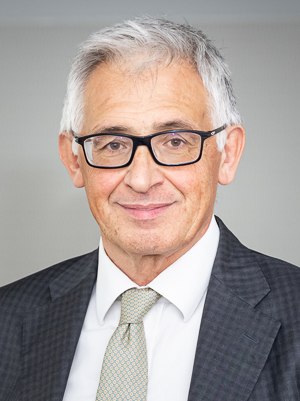
Interview with Piero Cipollone, Member of the Executive Board of the ECB, conducted by Lorenzo Torrisi on 10 August 2026
24 August 2026
What can be done to try to strengthen European firms, now that they are once again facing challenges because of external shocks?
First and foremost, we should try to capitalise on our advantages – the main one being the huge European Single Market. This can enable firms to expand their business, thereby achieving economies of scale that in turn reduce production costs – particularly in IT, finance and traditional manufacturing sectors such as the automotive sector. However, as is well documented in the reports by Mario Draghi and Enrico Letta, we are unable to exploit this advantage because of restrictions on the free movement of goods and services even within the European Single Market. They prevent firms from expanding and achieving the level of efficiency that would allow the EU to compete with the other global giants.
Therefore, the first task is to remove these internal Single Market restrictions.
I believe this is key. Before contemplating any other measures, we need to start making full use of existing opportunities by reducing barriers to the cross-border expansion of firms. In a market comprising 450 million of some of the world’s wealthiest consumers, this would allow champions to emerge that are equipped for production on a scale enabling them to compete at international level.
So there still has to be scope for cross-border business combinations.
Yes. Of course, it should be up to firms themselves to decide, in accordance with European competition law, how to expand. It doesn’t necessarily have to be achieved by acquiring other firms.
If the goal is to create a single European market, then European domestic demand is also of some importance.
Domestic demand is clearly an important factor. And, as evidenced by the size of the euro area’s current account surplus, we know that there is still scope for domestic demand to grow without creating external imbalances. This lack of demand is probably related to the difficulty of investing in Europe, which in part is linked to what I was saying just now: when it’s difficult to expand in the European market, it also gets harder to increase investment.
What role can the ECB play in strengthening the competitiveness of European firms?
The ECB has the statutory task of maintaining price stability, which is part of macroeconomic stability. This is essential for enabling firms to prosper, because it reduces uncertainty and the associated costs. Price stability also leads to more stable nominal interest rates, so firms are better able to plan for their future.
Currently there’s a risk of a rapid increase in cost-push inflation. In this scenario, could there be any drawbacks to increasing interest rates to stabilise prices?
In the event of a supply side shock, such as the oil shock, hiking interest rates so as to stabilise inflation around the target could dampen economic growth that is already affected by a negative shock. For this reason, monetary policy action needs to be well calibrated. Moreover, central banks cannot do much to address increases in energy commodity prices, but they can ensure that these increases are not reflected in medium-term inflation expectations. In other words, they can anchor expectations so economic agents know that, despite short-term volatility, inflation will return to 2%, the macroeconomic environment will stabilise, and they can therefore plan their activities.
Are you saying it is up to fiscal policy to try and reduce the temporary impact of the external shock?
Yes, but such measures should be temporary, targeted and limited to whoever really needs them. Experience shows that they are usually very costly and difficult to implement in a way that avoids regressive effects that favour the wealthier members of society. Moreover, they don’t help to solve the underlying problem, which is structural dependence on fossil fuels. Eliminating this dependency, or at least reducing it, would thus be a forward-looking policy that would permanently protect households and firms from external shocks.
So it’s a case of taking steps to ensure that within the energy mix, the share of sources of fossil fuels decreases while the share of sources of renewable energy increases?
In fact, this is the argument that justifies interventions like the flexibility under the national escape clause for investing in energy security, as amended by the European Commission in early June. And I think this is a sound argument, especially because as we move in the direction of renewable energy, we strengthen the competitiveness of European firms by reducing their energy costs. Don’t forget that whenever the price of oil or natural gas goes up, more of the resources of European households and firms is transferred towards oil-producing countries. If the share of renewables in the European energy mix was increased, these resources could instead remain in Europe and be redistributed under appropriate fiscal policies.
Inflation is a threat to household purchasing power. How can real wages be protected without subsequently triggering a wage-price spiral?
An exogenous shock like the one that has hit Europe makes Europeans economically worse off through lower profits for firms and a reduction in real wages for workers. In this case, the response can only be to reduce dependence on imported energy commodities. More broadly, productivity is crucial for real wage growth. In the long term, growth in people’s material well-being depends on productivity gains.
Going back to the initial topic we mentioned, does raising productivity boost firms’ competitiveness?
Yes, but we need to be careful about what measures are taken to boost competitiveness. Paradoxically, competitiveness can also be increased by extending working hours while keeping wages unchanged, or by lowering safety standards, but I don’t think anyone wants to go down that road. Instead, the goal should be to increase output for given costs and safety standards by making better use of production facilities and enabling staff to be more efficient.
So it’s not just firms that play a key role in this, but also the educational and training system?
Absolutely. Training and the quality of education are both crucial, especially given the emergence of new technologies and the current and future role that artificial intelligence will play in the productive sector.
At the start of the Strait of Hormuz crisis, some commentators compared the situation to the 1970s and raised the spectre of stagflation. Is there now a risk of economic stagnation in addition to a sharp increase in inflation?
No one has a crystal ball, but I think that risk is rather remote. First of all, there are signs that the crisis could soon be resolved, and even the price of oil seems to reflect that. Moreover, the latest available data indicate that, although the European economy is slowing, it is proving to be more resilient than expected, while inflation remains in line with the baseline scenario of the most recent projections published last June and seems to be a long way from the adverse and severe scenarios. We will of course need to monitor changes in the macroeconomic environment, but for the time being there are no signs pointing to a scenario of stagflation.
Last month the European Parliament approved the Regulation for the digital euro, which could be issued in 2029. However, concerns have been raised about the transaction-related data that the digital euro could generate compared with cash. Will the ECB be able to monitor payment habits and track how each citizen uses the digital euro?
I think it’s important to clarify three points about the digital euro. First, it will not replace cash but will complement it, for example when conducting transactions where cash can’t be used, such as online purchases. The ECB has actually just launched a public consultation on the design of the new euro banknotes, and it wouldn’t make any sense to do this if it were planning to get rid of cash. Second, the digital euro is designed to function offline, and in that case, transactions will take place directly between individuals and the related details will only be available to the payer and the payee.
What about the online functionality of the digital euro?
This brings me to the third clarification that it’s important to make: the Eurosystem would not be able to identify the users making or receiving payments. Only the banks involved in the transaction would be able to do so, including for anti-money laundering purposes.
Just as with any other bank transfer?
No. At present, in the case of a bank transfer, all the transaction details are known to the parties involved in the transaction. The digital euro would guarantee greater protection for privacy. In practice, whether used online or offline, the Eurosystem would not be able to directly link specific individuals to digital euro transactions. The digital euro guarantees the maximum level of privacy that current technology can offer.
Európai Központi Bank
Kommunikációs Főigazgatóság
- Sonnemannstrasse 20
- 60314 Frankfurt am Main, Németország
- +49 69 1344 7455
- media@ecb.europa.eu
A sokszorosítás a forrás megnevezésével engedélyezett.
Médiakapcsolatok