


- SPEECH
When It Matters Most: Upholding Independence in Challenging Times
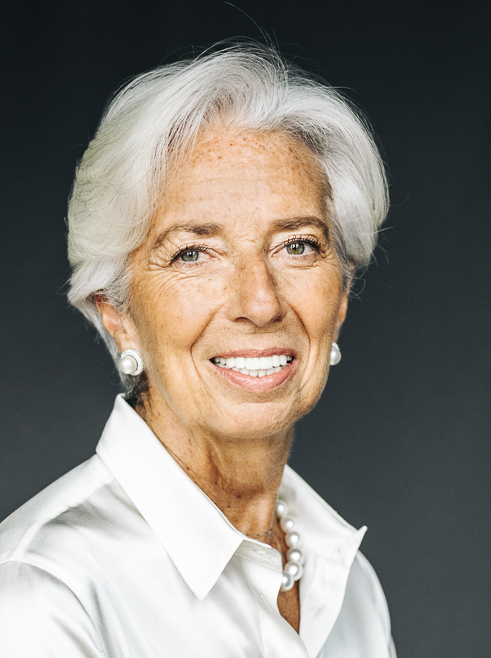
Speech by Christine Lagarde, President of the ECB, at the 28th meeting of Francophone Central Bank Governors, in Phnom Penh, Cambodia
Phnom Penh, 28 May 2026
“I want the bank to be in the hands of the government enough, but not too much.”
Napoleon Bonaparte said these words six years after founding the Banque de France, just as he was tightening his grip on the institution.[1] Two centuries later, these words still capture a tension that sits at the heart of our profession.
To best serve the public interest, a central bank must be close enough to the state – but independent enough to resist the pressures of the moment.
The 1970s taught us a great deal about this. The “great inflation” of that decade was not caused by a lack of independence, but by oil shocks and by the difficulty of interpreting supply shocks, for which central banks were unprepared.
But the empirical work that followed pointed to one clear and robust finding: countries with less independent central banks experienced higher and more persistent inflation.[2] This evidence underscored the need to shield monetary policy decisions from the electoral cycle.
By the turn of the millennium, more than four out of five central banks had become operationally independent.[3] Global inflation fell back to historically low levels.
This success, however, carried an inherent ambiguity. The architects of the doctrine knew that legal provisions alone were insufficient: de jure independence - written into statutes - had to be matched by de facto independence, which is demonstrated through the ability to effectively resist interference. Yet it was in this legalistic form that it spread across the world. And as long as the economic environment remained favourable – marked by globalisation, infrequent supply shocks and enough fiscal space – this distinction was inconsequential. Low inflation owed as much to the global environment as it did to the frameworks themselves.[4]
Today, these conditions are shifting, and a long-underestimated factor – the credibility earned through action – is becoming decisive. It is precisely when monetary policy decisions are politically fraught and economically costly that credibility is most needed. And it is also when credibility is hardest to keep.
The question is no longer simply how to guarantee independence. It is how to protect it when it is put to the test.
The European experience
Europe sheds a useful light here, precisely because the ECB has had to live through this test. Even before the classic test of high inflation, the ECB had to navigate crises that the architects of its independence had not foreseen - but that demanded equally difficult decisions.
The architects of monetary union understood the importance of central bank independence. Europe gave itself one of the most protective legal frameworks in the world. Its institutional model was inspired by the Bundesbank, whose credibility rested on the union of de jure and de facto independence. And yet, at its birth in 1998, that framework conferred no credibility on the ECB.
As Alexandre Lamfalussy had predicted: without a track record of its own, the new institution would be judged solely on its actions.[5]
It took a quarter of a century to anchor that trust in practice. In the early years, great vigilance was needed in the face of inflation, to prove that price stability was a genuine commitment rather than an abstract principle.[6]
The sovereign debt crisis posed a different challenge: how to preserve monetary transmission against fragmentation in sovereign bond markets, without stepping beyond the mandate? The unconventional instruments used in the years that followed – initially against fragmentation, then against very low inflation – were strictly guided by a monetary policy logic. These measures were not universally welcome. But those challenged in court were upheld and found to be consistent with the mandate. And in that moment, the true extent of independence was revealed: the ability to adapt instruments to circumstances, in full respect of the mandate underpinning them.
Then came the classic test. In 2022, confronted with inflation levels unprecedented in the history of the euro, the Governing Council tightened its policy at an unparalleled speed. These were not easy decisions. But long-term inflation expectations remained anchored. Households understood why the ECB was acting. Markets did too, and drew their own conclusions. The credibility built over two decades had done its job.
Here lies the key lesson: the treaties gave the ECB legal independence, but the crises gave it the authority it previously lacked to exercise that independence effectively.
But that is not the whole story. All of this was built in an environment that was still favourable, one where globalisation absorbed many of the shocks.
A more demanding environment
Today this environment is undergoing a transformation. And the framework in which we operate has become more demanding.
First, supply shocks are becoming more frequent, placing monetary policy before its most difficult dilemma, because they drive inflation and economic activity in opposite directions. Second, fiscal pressures stemming from defence needs, the climate transition, the digital transition and ageing are narrowing budgetary margins. And beyond these structural forces, a broader erosion is taking place, namely a decline in trust in public institutions, including in technical institutions like central banks.[7] Over the past decade, the de facto independence has deteriorated in almost half of central banks in countries that account for 75% of global GDP.[8]
When the Chair of the Federal Reserve publicly defended the institution’s independence, the ability to contain political pressures was thanks to the public support built up over the years through the Fed’s independent decision-making. Voices from across the political spectrum had also underscored this independence. The matter is not settled, but we can clearly see the mechanism at play: where credibility exists, defending independence does not fall on the central bank’s shoulders alone. Instead, it is upheld by all those who have witnessed its value.[9]
Many of the central banks represented here today have long operated under structurally more challenging conditions. They have had to build up their credibility without leaning on a longstanding established institutional heritage. They have weathered frequent and asymmetric external shocks – in commodities, capital and climate; and needed to safeguard monetary independence in the face of tight fiscal constraints, which impose challenges on monetary policy that others have only begun to encounter recently.
You have long practised the work that has now become the task of all. We have more to learn from your experience than the other way around.
Three conditions for maintaining independence in a more demanding environment
Three practical conditions seem essential to safeguard central bank independence.
The first is clarity of the mandate, as understood by the central bank itself. Price stability must remain the primary objective, and it must be defended even if there is a real, immediate cost. The Eurosystem supports the EU’s general economic policies – growth, employment and climate – but only insofar as they do not harm this primary objective. This hierarchy protects the central bank from outside pressure and allows it to commit to secondary objectives, but never at the expense of the first. When a central bank is seen to turn this hierarchy on its head, its independence suffers as a result.[10]
The second condition is direct communication with citizens. The anchoring of inflation expectations depends on households being convinced that the central bank will do what it says. This conviction is built less by words than by accumulated experience - the sense that commitments, once made, are consistently kept. This conviction gains democratic legitimacy through transparent decision-making methods and accountability to elected institutions. It is in this space that credibility is earned - and also where it can be lost most quickly, when decisions and words no longer align.
The third condition is preserving the room for manoeuvre of monetary policy. That room depends first and foremost on fiscal responsibility: the legal frameworks cannot safeguard central bank independence when fiscal trajectories become unsustainable.[11] It also depends on the resilience of the financial system. When fragility in parts of the system - whether in banks, non-bank intermediaries or the financial markets - make each interest rate change potentially destabilising, the central bank sees its room for manœuvre curtailed and financial stability considerations risk overshadowing price stability in practice. Maintaining monetary independence therefore requires, alongside fiscal responsibility, financial regulation that sustains the resilience acquired since 2008 – and which extends to the new components of the financial system that have developed since then.
Conclusion
Let me to conclude by returning to where I began.
To restore trust in the currency, Napoleon founded the Banque de France, after the hyperinflation caused by the assignats had wiped out French households' savings.[12] But several years later, as the demands of the state grew, he once again tightened his grip on the central bank, and gradually took back the independence he had granted.
It is precisely this temptation that the period ahead is likely to sharpen. Over the two centuries that separate us from that period, a remarkable institutional response has emerged - one that must, however, be protected and cultivated. In a world where conditions are getting harder, the challenge is no longer to simply maintain legal independence, but above all to maintain the credibility that is needed to exercise it. And the lesson of history is clear: it takes time to build trust, but only an instant to lose it.
For money rests on a promise: that its value will be preserved over time. This promise depends on the trust that citizens place in the institutions charged with safeguarding it. Preserving that trust – and so to preserve the value of money – is the mission that brings us all here today.
Thank you.
Banque de France (2025), "Depuis 225 ans au service de la France et des Français," January.
Kydland, F.E. and Prescott, E.C. (1977), “Rules Rather than Discretion: The Inconsistency of Optimal Plans”, Journal of Political Economy, Vol. 85, No 3, pp. 473-492; Barro, R.J. and Gordon, D.B. (1983), "Rules, Discretion and Reputation in a Model of Monetary Policy," Journal of Monetary Economics, Vol. 12, Issue 1, pp. 101-121; Alesina, A. and Summers, L.H. (1993), “Central Bank Independence and Macroeconomic Performance: Some Comparative Evidence”, Journal of Money, Credit and Banking, Vol. 25, No 2, pp. 151-162 ; Jung, A. (2025), “Why central bank independence matters – lessons from the past 50 years”, The ECB Blog, ECB, 23 December.
Haldane, A. (2020), “What Has Central Bank Independence Ever Done for Us?”, speech at UCL Economists’ Society Economics Conference, 28 November, citing Garriga, A. (2016), “Central Bank Independence in the World: A New Dataset”, International Interactions, Vol. 42, No 5, pp. 849-868.
For the determinants of inflation and the role of global structural factors, see ECB (2021), “An overview of the ECB’s monetary policy strategy”, July, and the preparatory work for the strategic review.
Lamfalussy, A. (1997), “The European Central Bank: Independent and Accountable”, in Maes, I. (ed.) (2017), Alexandre Lamfalussy: Selected Essays (2017), Magyar Nemzeti Bank, p. 334.
Rostagno, M. et al. (2019), "A tale of two decades: the ECB's monetary policy at 20", Working Paper Series, No 2346, ECB, December.
See OECD (2024), OECD Survey on Drivers of Trust in Public Institutions – 2024 Results: Building Trust in a Complex Policy Environment,; and Ehrmann, M. (2025), "Trust in Central Banks", Journal of Economic Surveys, on the rapid and persistent erosion in trust in central banks in the wake of soaring inflation after the pandemic.
Dall’Orto Mas, R. et al. (2020), “The case for central bank independence – a review of the key issues in the international debate”, Occasional Paper Series, No 248, ECB, October.
Powell, J. (2026), FOMC press conference, 29 April.
Tucker, P. (2018), Unelected Power: The Quest for Legitimacy in Central Banking and the Regulatory State, Princeton University Press, May.
Sargent, T.J. and Wallace, N. (1981), “Some Unpleasant Monetarist Arithmetic”, Federal Reserve Bank of Minneapolis Quarterly Review, Vol.5, No 3 (Fall), pp 1-17.
Sargent, T.J. and Velde, F.R. (1995), "Macroeconomic Features of the French Revolution", Journal of Political Economy, Vol. 103, Issue 3, pp. 474–518.
Europäische Zentralbank
Generaldirektion Kommunikation
- Sonnemannstraße 20
- 60314 Frankfurt am Main, Deutschland
- +49 69 1344 7455
- media@ecb.europa.eu
Nachdruck nur mit Quellenangabe gestattet.
Ansprechpartner für Medienvertreter