


- INTERVIEW
Interview with Ouest-France
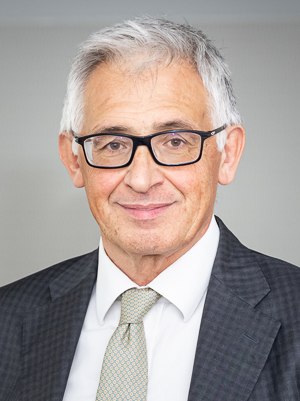
Interview with Piero Cipollone, Member of the Executive Board of the ECB, conducted by Élisabeth Montaufray-Bureau on 10 July 2026
15 July 2026
What is your view on last Thursday’s vote by the European Parliament to back the digital euro?
It was a very important step because the Parliament represents Europe’s citizens and its endorsement lends great legitimacy to the project. The Parliament voted almost 70% in favour of the digital euro. It took the time to listen to all European stakeholders – merchants, citizens and banks – and to other central banks outside the euro area. This democratic process has helped ensure that the digital euro is completely robust. The digital euro will safeguard the freedom of Europeans to choose how they pay. That was the issue at stake in the vote.
What would you say to those that voted against the digital euro?
I also listened carefully to those who voted against it. They had two main reasons for doing so: protection of privacy and concerns about a form of Big Brother-style surveillance. But we designed the digital euro with these concerns in mind: it will offer the highest degree of privacy currently possible with today’s technology.
When you pay offline, the digital euro will offer cash-like levels of privacy: the transaction details will be known only to the payer and the payee. And even when you make payments online, the central bank will not know that you’re the one who made them. All the data will be encrypted; only your bank will know that you made the payment.
For you, is the digital euro a purely technical project or a geopolitical one?
Providing a means of payment is at the heart of a central bank’s mandate. That is what we do now by providing cash and issuing euro banknotes. And we will continue to do so.
But the economy has evolved. Today, one-third of Europeans’ transactions take place online, on e-commerce websites. Naturally, we can’t use cash for these payments. It is therefore very important to provide Europeans with a digital form of cash to complement the physical banknotes and coins we are familiar with.
The digital euro is a technical response in the truest sense of the word. But it also brings benefits in the current geopolitical context. Currently, most of the infrastructure that people in Europe use to make their everyday payments is not in European hands. That’s a problem for the central bank, whose role is to ensure the smooth functioning and continuity of payment systems. The digital euro will address this issue.
How will the pilot due to start in September 2027 work?
It will initially be a small-scale pilot of the digital euro. It will involve merchants, banks and, as users, employees of the ECB and the national central banks.
In March we invited European payment service providers, including banks, to take part in this pilot. More than 50 applied. We selected 36 participants – including French providers like BPCE (a banking group that includes Banque Populaire, Caisse d’épargne and Crédit Coopératif) and Worldline (a leading company specialised in payment processing). This selection enables us to cover a wide range of profiles across almost the entire euro area. We will work together to prepare for the pilot, which we plan to launch in September 2027 for a period of 12 months.
What is the business model of the digital euro?
The current business model for card payments involves six main players: the customer, the merchant receiving the payment, the banks – namely the customer’s bank and the merchant’s bank – the technical service provider that processes the transaction and, finally, the owner of the card scheme, such as Visa, Mastercard or Cartes Bancaires, which defines the rules of the game. At present, merchants must pay a percentage of the transaction value to cover both the card scheme’s fees and the fees charged by the banks involved in the transaction.
By contrast, with the digital euro, the ECB and the national central banks will set the rules of the game, while respecting the legislator’s choices and involving all stakeholders. And the ECB will neither collect any scheme fees nor charge any fees for processing transactions. This will create savings that can be shared among merchants and banks. How these savings will be distributed is still being discussed by European legislators. But what is certain is that merchants will benefit. They will be required to accept the digital euro for digital payments, just as they are required to accept cash today. But they will be protected by a cap on the fees they have to pay.
And on the cybersecurity front?
Security is our top priority, especially given the advances in artificial intelligence.
Fortunately, the ECB already has extensive experience with payment systems. The Eurosystem – comprising the ECB and the euro area national central banks – currently operates three of them. One is a payment system called T2, which is used for interbank payments. Every eight days, T2 processes a volume of transactions with a value equivalent to the euro area’s annual GDP. Another system is used to settle securities transactions while the third enables instant payments. All of these systems, which are vital to the functioning of the European economy, meet the highest cybersecurity standards, and we continuously test and strengthen them. We will do the same for the digital euro.
How much will the digital euro cost?
There are two aspects to this: the cost for the Eurosystem and the cost for the banks that will provide this service. These costs will depend on the final decisions taken by the legislators, notably regarding the number of digital euro accounts that each European will be allowed to hold. However, we currently estimate that the total development cost for the Eurosystem would be around €1.3 billion, with annual operating costs running to approximately €320 million.
These costs will be more than offset by the revenues generated by the Eurosystem from issuing the digital euro, as is already the case with cash: this income is known as seigniorage.
The annual costs for euro area banks of preparing for the digital euro over a four-year period would amount to no more than 3.4% of the budget they spend each year on updating their IT systems. The costs therefore remain manageable.
What is the difference between Wero and the digital euro?
There are two main differences. For one, the digital euro is central bank money, just like cash. Wero, by contrast, allows you to make payments using the money held in your bank account. The other difference is that the digital euro will be accepted by all European merchants. Users will be certain that they can pay with the digital euro throughout the euro area, whether connected to the internet or not. They will be able to use it for in-store, person-to-person and online payments.
The digital euro will also benefit solutions such as Wero. By using digital euro standards, these solutions will be able to more easily expand their acceptance among a wider range of merchants. And by integrating the digital euro, they can ensure that their users are able to make payments in all situations, anywhere in the euro area. So in places where Wero is not yet accepted, users could still pay using digital euro, allowing the transaction to go through.
This is one of the benefits of the digital euro: it will help European payment solutions expand and will support innovation. It will help improve the services available to Europeans while also reducing transaction fees, which are ultimately reflected in the prices consumers pay.
Leaving the digital euro aside, the ECB will hold another monetary policy meeting at the end of July. Why raise your key interest rates when the inflation we are seeing today is being imported through higher oil prices?
We are currently facing an energy shock, driven notably by oil prices. When energy prices rise, they have three main effects. The first is a direct effect: for example, consumers pay more at the petrol pump. The second is an indirect effect: an increase in energy prices pushes up the costs of producing goods and leads to higher prices, including for food. The third type of effect is what we call second-round effects: when households and businesses expect inflation to remain high, firms raise prices to protect their profit margins while employees seek larger wage increases. If these adjustments become too pronounced, they create additional costs that, in turn, feed into inflation.
Today we are observing the first two effects but not the third. What the ECB can do through its monetary policy is prevent these second-round effects from taking hold and convince households and businesses that inflation will return to our 2% target over the medium term. That is why we monitor inflation expectations very closely. If medium to long-term inflation expectations remain anchored at 2%, inflation will return to our target and we will have done our job.
Europäische Zentralbank
Generaldirektion Kommunikation
- Sonnemannstraße 20
- 60314 Frankfurt am Main, Deutschland
- +49 69 1344 7455
- media@ecb.europa.eu
Nachdruck nur mit Quellenangabe gestattet.
Ansprechpartner für Medienvertreter