


- INTERVIEW
Interview with Jornal de Negocios
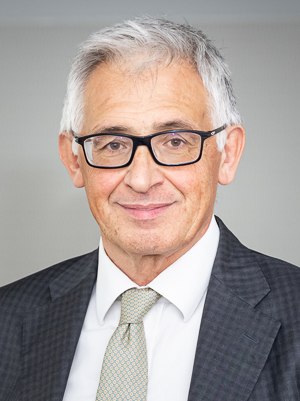
Interview with Piero Cipollone, Member of the Executive Board of the ECB, conducted by Ricardo Jesus Silva on 29 June 2026
13 July 2026
The European Parliament gave the digital euro the green light last week. Do any major hurdles still remain or is the way clear for the project to be implemented?
There are currently three versions of the draft legislation: the European Commission’s, the Council’s – representing the joint position of Member States – and the Parliament’s. The three institutions will already start negotiating this month to reach an agreement on the final text. We hope the text will be finalised by the end of the year, at which point we’ll be in a position to take a decision on the future issuance of the digital euro.
The vote in the European Parliament last week was a very important milestone, particularly because some lawmakers were initially more critical of the Commission’s proposal. However, the text that was ultimately approved aligns closely with the approach taken by the Commission and the Council. We hope the three-way negotiations will proceed without any major difficulties.
Is the ECB satisfied with the stance adopted by the European Parliament?
Generally speaking, yes. The text largely aligns with the approach outlined in the Commission’s initial proposal. There are some aspects we would like to see reinforced, such as the requirement for payment service providers to support the digital euro app that the ECB is developing. This app will ensure universal access, resilience in exceptional circumstances and a level of accessibility that goes above and beyond European accessibility standards. In keeping with the Commission’s proposal, we would like the final text to ensure that all Europeans will always have the option of using this app.
The digital euro has been viewed by some political groups in the European Parliament as a divisive project. Do you think these differences of opinion will be overcome during the negotiations?
I don’t agree with the claim that it’s a divisive project. The digital euro was approved by almost 70% of European Parliament members. That’s anything but divisive. And in the EU Council, all the Member States agreed on a common position.
We are dealing with a highly transformative project and that’s why it’s important that it has strong democratic support. In designing the digital euro, we have aimed to address all the concerns that have been expressed in the legislative process.
We are working to make sure the digital euro works for everyone, with the highest standards of privacy and accessibility. The digital euro will be a digital form of cash, complementing the euro banknotes and coins that bring Europeans together.
If the text is not approved by the end of the year, does the ECB have room to accommodate that delay without having to redesign the project?
We aim to be ready for first issuance in 2029, assuming the legislative process is completed by the end of 2026. We have always said that if this process is delayed, we will have to take another look at the timetable, not the project. In any case, we will only take a decision on issuance of the digital euro once the legislation has been adopted.
The technical side of the project is advancing fast and under our current timeline we will launch the pilot phase in 2027. The pilot will be a key chance to test the digital euro design and gather feedback. It will be the first step, followed by additional steps focused on scaling up and developing functionalities in preparation for the issuance.
What does the digital euro mean for a country like Portugal, which already has MB WAY, its own national payment system? What advantages will it offer Portuguese people in their daily lives?
Above all else, it will bring simplicity. It’s true that Portugal has a very efficient payment system. But people are not only Portuguese citizens; they are also European citizens.
When a US bank issues a debit card, the customer expects to be able to use it anywhere in the United States. That’s not the case in Europe. A national card or payment solution, such as MB WAY, works properly in Portugal, but will not be accepted in Croatia or Finland, for example, unless it is co-badged with non-European international networks. Even when they do work, many of these national solutions have limits. The digital euro will make it possible to use one single means of payment throughout the entire European Union for every kind of payment, without relying on foreign infrastructure.
But there is an even more important dimension. Europeans are not just consumers; they are also citizens. And, as such, they should be concerned about the security of the payment system.
Today, two-thirds of card payments made in Europe are processed by non-European systems. That represents a significant vulnerability, particularly when there is geopolitical tension. The knowledge that you can make payments anywhere in Europe, under any circumstances, using European infrastructure, strengthens both the security of the payment system and confidence in it.
Moreover, the digital euro will offer a feature that no other payment solution currently offers: offline payments. Users will be able to make payments by simply bringing two smartphones together, without the need for an internet connection. This functionality could be extremely useful. Remember, for example, the major blackout that affected Spain and Portugal last year. If people had had digital euro on their devices, they would have been able to continue making payments, even without access to the internet network.
Where does this leave firms like SIBS, which owns MB WAY? How can they benefit from the digital euro?
The digital euro will be made available through the banks. The banks will benefit because right now there is no private solution that can cover the whole of Europe for all types of transaction.
In order to offer their customers a solution that works throughout Europe, the banks have to resort to co-badging together with non-European international networks. And there’s a cost for this.
Every time a payment is processed through these networks, the issuing bank has to pay significant fees. Banks receive remuneration for payments, but some of this revenue is transferred to these international networks. If the banks used the digital euro instead, they would no longer pay these fees. We are talking about rather large amounts.
Do you envisage a set-up in which Portuguese citizens could access the digital euro through apps that they already use, like MB WAY?
Absolutely. That’s exactly the idea. Existing apps will be able to incorporate the functionalities of the digital euro.
You have argued that the digital euro is important for strengthening Europe’s independence and autonomy relative to US payment service providers. Why is that so important now?
Currently 13 of the 21 euro area countries do not even have their own national payment system. Countries like Finland and Croatia have nothing like MB WAY, they just use international card schemes. Payments are reliant on infrastructure that is not under European governance. For us, as a central bank, that’s a cause for concern. That’s one of the reasons why we are developing the digital euro. Even if the current geopolitical tensions did not exist, we would still continue this work.
What has changed is the urgency attached to fulfilling our mandate of ensuring the good functioning of Europe’s payment systems. The current international environment has amplified the importance of strategic autonomy. The digital euro strengthens this autonomy because it lets people know that the infrastructure through which they make their payments is under the governance of European institutions. This boosts confidence in the currency and preserves our monetary sovereignty.
The United States has dropped the digital dollar. Several European banks are also developing stablecoins denominated in euro. Can the digital euro and stablecoins coexist?
This was a decision taken by the US authorities. In Europe, the authorities have taken a different decision. We believe it is essential to safeguard the right of citizens to use public money in a digital economy. This is what the digital euro represents: a digital form of cash, which will complement physical cash. It will ensure people remain free to choose how to pay.
But if someone wants to use stablecoins issued under EU legislation, they are free to do so. It’s not up to us to decide how people should make payments. Our job is to ensure that citizens always have the option of paying digitally using the money issued and backed by their central bank, as they currently do with cash.
There is a ceiling on how much digital euro people can hold in their accounts. What amounts are we talking about?
This process will be defined in the legislation. Looking at the legal text adopted so far, the ECB, in agreement with the European Commission, will make a recommendation on how high this ceiling can be. Then it will be up to the legislators to take the decision and, up to that ceiling, the ECB will decide how much digital euro citizens can hold. We have already published the simulations we did at the request of the European Parliament. These simulations applied different limits of between €500 and €3,000. Even in the case of an extreme crisis, within these limits we have not identified any relevant risks to financial stability.
Importantly, consumers will also be able to make and receive payments in amounts exceeding this limit, thanks to a link with their own bank account. This will ensure seamless digital euro payments, whatever the size of the transaction and the level of the holding limit.
How did the talks go with the banks about this question? Did they ask for a lower limit?
Anyone who studies economics learns that it is more important to pay attention to what people do rather than what they say. And what we saw when we issued the invitation to participate in the digital euro pilot project was that over 50 European banks and payment service companies applied, which to me seems like a very strong sign of confidence from the banking sector. We will announce this week the applicants that have been chosen.
(The first question and answer were updated to reflect the 9 July 2026 European Parliament's vote on the Single Currency Package. The last sentence was added.)
Banc Ceannais Eorpach
Stiúrthóireacht Cumarsáide
- Sonnemannstrasse 20
- 60314 Frankfurt am Main, an Ghearmáin
- +49 69 1344 7455
- media@ecb.europa.eu
Ceadaítear atáirgeadh ar choinníoll go n-admhaítear an fhoinse.
An Oifig Preasa