


Swap lines
Swap lines between two central banks are currency swap arrangements to exchange currencies at a predetermined rate, with a commitment to reverse the transaction at a specified future date.
They are typically used by central banks to provide liquidity in a foreign currency to their respective financial systems.
In the Eurosystem, swap arrangements are decided upon by the Governing Council on a case-by-case basis, considering:
- the systemic relevance of the country of the requesting foreign central bank
- its interconnectedness with the euro area
- the strength of its fundamentals and creditworthiness
- the need for or existence of a reciprocal arrangement (an agreement for the ECB to receive foreign currency to support euro area banks)
How do swap lines support the smooth transmission of monetary policy?
Swap lines support the smooth functioning of euro area monetary policy. By supplying euro to central banks outside the euro area, swap lines can assist in alleviating potential shortages of euro funding in those countries during periods of market strain. This reduces the likelihood that financial pressures in other regions will affect the euro area.
Moreover, reciprocal swap arrangements ensure that funds in the foreign currency are continuously available to euro area banks. This prevents tensions in international funding markets potentially impairing euro area banks’ access to foreign currency or increasing their funding costs, which may lead to abrupt deleveraging, extreme price movements and interruptions to the flow of credit that could risk hampering the smooth transmission of euro area monetary policy.
Swap lines
The ECB provides euro against foreign currencies, which are accepted as collateral. Under reciprocal swap lines, the ECB may also receive foreign currency by providing euro as collateral.
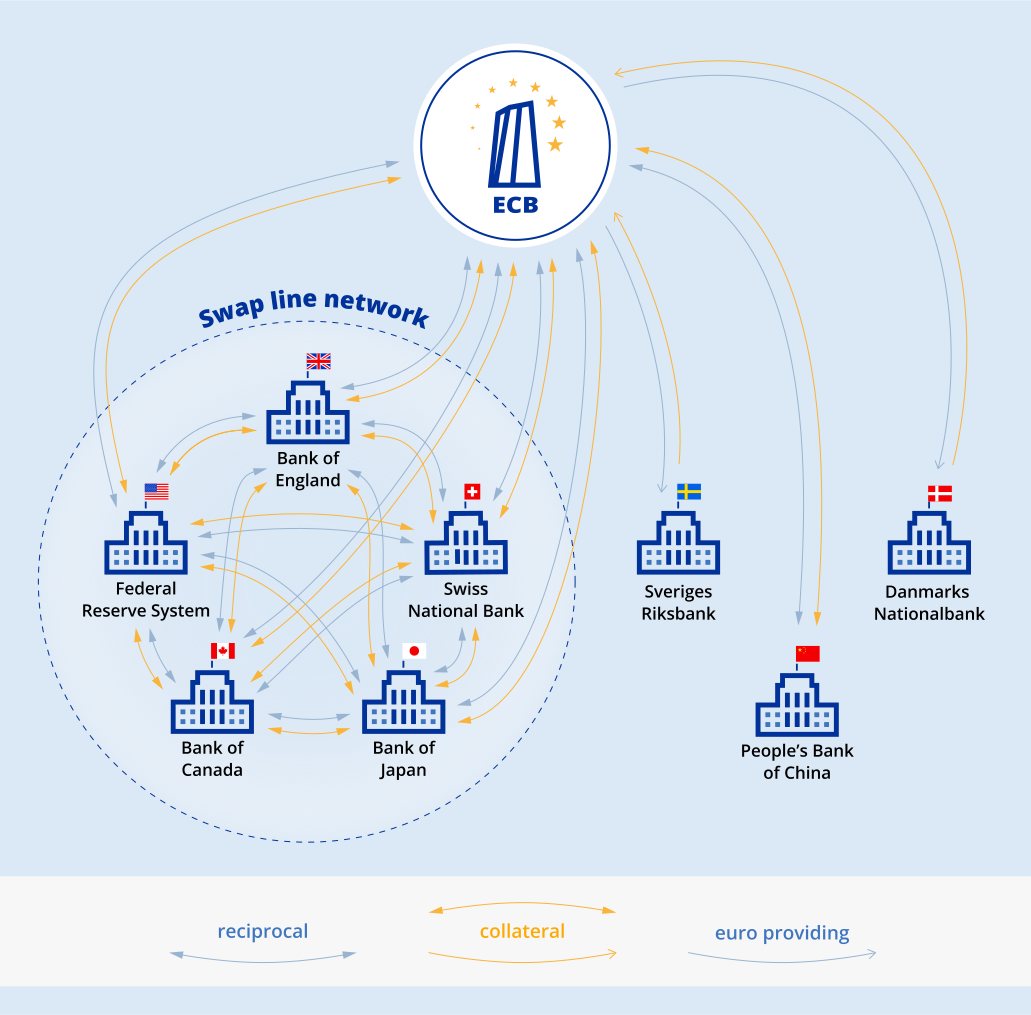
Source: ECB.
Notes: Illustration of the agreements in place as at 25 January 2024. For the current list of agreements, see the table below.
List of central bank liquidity lines that the Eurosystem maintains (as of 8 September 2025)
| Non-euro area counterpart | Type of arrangement |
Maximum borrowable amount |
Expiry date | Reciprocal |
|---|---|---|---|---|
| Danmarks Nationalbank | Swap line | 24,000 | Standing | No |
| Sveriges Riksbank | Swap line | 10,000 | Standing | No |
| Bank of Canada | Swap line | Unlimited | Standing | Yes |
|
People’s Bank of China* |
Swap line | 45,000 |
8 October 2028 |
Yes |
| Bank of Japan | Swap line | Unlimited | Standing | Yes |
| Swiss National Bank | Swap line | Unlimited | Standing | Yes |
| Bank of England | Swap line | Unlimited | Standing | Yes |
| Federal Reserve System | Swap line | Unlimited | Standing | Yes |
|
* Maximum borrowable amount is set at CNY 350 billion when Chinese renminbi are provided to the ECB. |
||||
How does it work in practice for a bank in need of foreign currency?
Under normal circumstances a bank in the euro area turns to the market if it needs foreign currency, say US dollars, to provide a loan to a client, for example. But if US dollar funding costs are too high or if the market is disrupted, the bank can go to its national central bank. In this particular case the ECB can get dollars thanks to the swap line with the Federal Reserve.
The Eurosystem then conducts regular US dollar-providing operations, via which euro area banks can say how many dollars they want to borrow at a predefined interest rate.
In return for the dollars, they must provide the Eurosystem with high-quality collateral, the value of which is determined by current market prices (“mark to market”) minus an appropriate haircut.
Data on euro provision through EUREP and swap linesLooking for the latest on swap lines?
Find it below