


- STATISTICAL RELEASE
Households and non-financial corporations in the euro area: first quarter of 2026
03 July 2026
- Households’ financial investment increased at higher annual growth rate of 2.8% in first quarter of 2026 (after 2.6% in previous quarter)
- Non-financial corporations’ financing grew at unchanged annual rate of 1.5%
- Non-financial corporations’ gross operating surplus decreased at annual rate of -0.8% (after 5.2% in previous quarter)
Chart 1
Household financing and financial and non-financial investment
(annual growth rates)
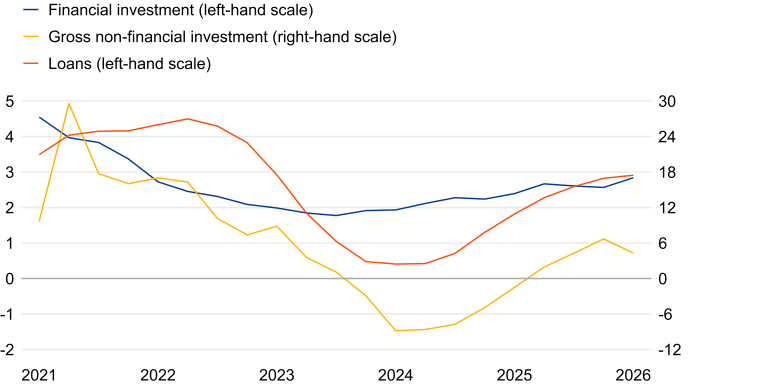
Sources: ECB and Eurostat.
Chart 2
NFC gross-operating surplus, non-financial investment and financing
(annual growth rates)

Sources: ECB and Eurostat.
Households
Household gross disposable income increased at a lower annual growth rate of 3.0% in the first quarter of 2026 (after 3.3% in the previous quarter). Gross operating surplus and mixed income of the self-employed grew at a higher rate of 2.5% (after 2.3%), while the compensation of employees grew at a lower rate of 4.0% (after 4.3%). Household consumption expenditure increased at an unchanged rate of 3.6%. As a result, the household gross saving rate in the first quarter of 2026 was 14.5%, compared with 14.7% in the previous quarter.
Household gross non-financial investment (which refers mainly to housing) increased at a lower annual rate of 4.3% in the first quarter of 2026 (after 6.7% in the previous quarter). Loans to households, the main component of household financing, grew at a broadly unchanged rate of 2.9%.
Household financial investment increased at a higher annual rate of 2.8% in the first quarter of 2026 (after 2.6% in the previous quarter), driven by the accelerated growth for pension schemes (5.1%, after 2.6%)[1] and debt securities (3.8%, after 3.1%). Currency and deposits (3.0%), shares and other equity (1.8%) and life insurance (2.6%) all grew at broadly unchanged rates.
Household net worth increased at a lower annual rate of 3.9% in the first quarter of 2026 (after 4.9% in the previous quarter). The slower growth was mainly due to a lower growth in valuation of non-financial assets. Housing wealth, the main component of non-financial assets, grew at a lower rate (3.3%, after 4.6%). The household debt-to-income ratio was broadly unchanged at 81.0% in the first quarter of 2026 compared to the first quarter of 2025.
Non-financial corporations
Net value added by NFCs grew at a lower annual growth rate of 1.4% (after 4.6%) in the first quarter of 2026. Gross operating surplus decreased in the first quarter of 2026 (-0.8%), after growing (5.2%) in the previous quarter, and net property income – defined in this context as property income receivable minus interest and rent payable – increased (13.8%). As a result, gross entrepreneurial income (broadly equivalent to cash flow) increased at a lower rate of 0.7% (after 4.9%).[2]
NFCs’ gross non-financial investment increased at a lower annual growth rate of 1.1% (after 1.8%).[3] Financial investment grew at an unchanged rate of 2.2% compared with the previous quarter. Among its components, loans granted grew at a higher rate of 2.7% (after 2.3%), while investment in shares and other equity grew at a broadly unchanged rate of 0.9%.
Financing of NFCs increased at an unchanged annual rate of 1.5%, as loan financing[4] (2.6%) and equity financing (0.6%) grew at broadly unchanged rates in the first quarter of 2026. The growth rate of net issuance of debt securities by NFCs increased to 3.7% (after 3.2% in the previous quarter), and trade credit financing grew at a higher rate of 4.6% (after 4.3%).
NFCs’ debt-to-GDP ratio (consolidated measure) decreased to 66.0% in the first quarter of 2026, from 67.5% in the same quarter of the previous year; the non-consolidated, wider debt measure decreased to 137.5%, from 138.7%.
For queries, please use the Statistical information request form.
Notes:
- This statistical release incorporates revisions to the data since the first quarter of 2022, also reflecting the inclusion of Bulgaria in the euro area aggregates, which now cover all 21 members of the euro area. These revisions did not significantly alter the figures previously published, which referred to the first 20 members of the euro area only.
- The annual growth rate of non-financial transactions and of outstanding assets and liabilities (stocks) is calculated as the percentage change between the value for a given quarter and that value recorded four quarters earlier. The annual growth rates used for financial transactions refer to the total value of transactions during the year in relation to the outstanding stock a year before.
- The euro area and national financial accounts data of NFCs and households are available in an interactive dashboard.
- Hyperlinks in the main body of the statistical release are dynamic. The data they lead to may therefore change with subsequent data releases as a result of revisions. Figures shown in annex tables are a snapshot of the data as at the time of the current release.
- The ECB publishes experimental Distributional Wealth Accounts (DWA) which provide additional breakdowns for the household sector. The release of results for 2026 Q1 will take place on 24 August 2026.
The higher investment in pension entitlements is partly due to the conversion of pension schemes from defined benefits to defined contributions in the Netherlands, resulting in a net increase of households’ pension entitlements.
Gross entrepreneurial income is the sum of gross operating surplus and property income receivable minus interest and rent payable.
Gross non-financial investment is the sum of gross fixed capital formation, changes of inventories, and the net acquisition of valuables and non-produced assets (e.g. licences).
Loan financing comprises loans granted by all euro area sectors (in particular MFIs, non-MFI financial institutions and loans from other non-financial corporations) and by creditors that are not resident in the euro area.