


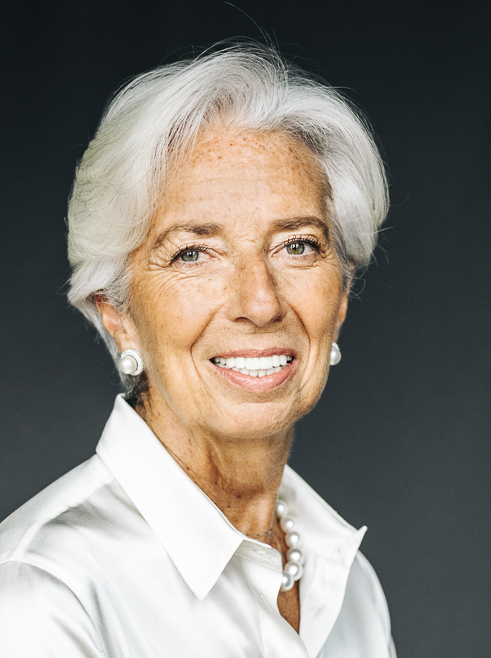
Speech by Christine Lagarde, President of the ECB, at the plenary session of the European Parliament
Strasbourg, 9 February 2026
It is a pleasure to be back in this plenary chamber for the debate on your draft resolution on the ECB’s Annual Report. Today’s debate is a key pillar of our accountability to you, the elected representatives of the European Union.
Your resolution underscores that the ECB’s independence is essential for us to deliver on our mandate of price stability. At a time when central bank independence is being challenged in parts of the world, your clear support sends an important signal.
But, as you also emphasise, independence does not mean isolation. The ECB does not stand apart from democratic scrutiny. Our independence goes hand in hand with our accountability to this Parliament. Regular hearings, written exchanges and our Annual Report all reflect this commitment. Our dialogue today continues this process of explanation and scrutiny.
In my remarks, I will address issues you raise in your resolution, with a particular focus on strengthening Europe’s resilience and competitiveness in a challenging global environment.
Ensuring stability in an uncertain environment
When I appeared before the Committee on Economic and Monetary Affairs last October, I described how geopolitical shifts were reshaping Europe’s place in the world. We are operating in a volatile global environment marked by heightened geopolitical tensions and persistent policy uncertainty. These developments are affecting trade flows, energy security, and strategic dependencies. Supply chains are becoming more fragmented, and industrial policies are reshaping global competition.
In this environment, we need strong domestic anchors of stability and resilience. One such anchor is price stability – which, as your resolution rightly underlines, is a necessary condition for sustainable growth, competitiveness and investment.
In the aftermath of the pandemic and Russia’s unjustified invasion of Ukraine, the ECB had to navigate the most challenging episode of high inflation since the introduction of the euro. But the picture has changed significantly.
Annual inflation stood at 1.7% in January and we expect inflation to stabilise sustainably at our 2% medium term target. According to the latest Eurosystem staff projections from December, headline inflation is expected to average 1.9% in 2026, 1.8% in 2027 and 2.0% in 2028.
At the same time, despite the challenging environment, economic activity in the euro area has been resilient. The economy is estimated to have grown by 0.3% in the fourth quarter of last year and by 1.5% in 2025 as a whole – better than what was projected for 2025 at the start of that year.
At our meeting last Thursday, the Governing Council decided to keep interest rates unchanged as our updated assessment reconfirmed that inflation should stabilise at our 2% target in the medium term. In the current uncertain environment, our data-dependent, meeting-by-meeting approach to monetary policy serves us well.
We will continue to follow this approach, basing our decisions on our evolving assessment of the inflation outlook and the risks surrounding it, in light of the incoming economic and financial data, as well as the dynamics of underlying inflation and the strength of monetary policy transmission.
Bolstering Europe’s resilience and competitiveness
By fulfilling its mandate, the ECB provides a key source of stability for the euro area economy and an anchor in an increasingly uncertain world. But, as your resolution rightly highlights, our contribution does not end there.
The ECB also plays a role in strengthening resilience and competitiveness in other essential areas, which underpin a dynamic and robust euro area economy.
First, the future of central bank money.
We want to ensure that people can continue to use central bank money in all situations of daily life. We are therefore strongly supporting the proposed legal tender Regulation to ensure that cash remains available and accessible to all and that no undue restrictions are placed on its use. And we are preparing to issue a third series of euro banknotes with a new design.
But cash cannot be used for digital payments and its share in day-to-day payments is declining as a result. We therefore need to complement physical cash with its digital equivalent, a digital euro.
The digital euro will provide consumers a solution that is accepted for any digital payment, throughout the euro area. It will guarantee the highest level of privacy: by design we at the central bank will not have access to personal data. And it will be possible to pay offline, with cash-like privacy.
The digital euro will also benefit European businesses. It will reduce fees for merchants, in particular small ones. And it will make it easier for European private payment service providers to expand the reach of the solutions they offer.
Finally, it will be built on a fully European infrastructure, avoiding an excessive dependency on foreign providers for payments systems that are critical to the functioning of our economy.
As co-legislator, you have a key role to play in delivering these benefits by making decisive progress towards the adoption of the digital euro Regulation.
In parallel, we also aim to make tokenised central bank money available to support the development of an integrated European ecosystem for digital assets. This will ensure that this ecosystem has a risk-free, euro-denominated, European asset at its core.
This initiative, which you welcome in your resolution has two ambitions.
The first is to make it possible to settle DLT-based wholesale transactions in central bank money. Our project Pontes will deliver a solution for this purpose to the market already in the third quarter of this year.
Our second ambition is to unlock the full potential of tokenisation. Our project Appia aims to create a European market for digital assets that is integrated from the outset. The ECB’s goal is to develop more resilient and integrated market infrastructures, harnessing digital finance to benefit the euro area economy.
Second, simplification.
Our High-Level Task Force on Simplification has recently presented its recommendations for simplifying Europe’s regulatory, supervisory and reporting framework while maintaining a strong and resilient banking sector. These proposals aim to reduce unnecessary regulatory complexity while upholding international standards. A clear, harmonised and proportionate regulatory framework is vital for a strong financial system that supports the real economy.
Yet, Europe’s resilience and competitiveness ultimately depend on the wider policy framework.
Advancing the savings and investments union is essential. Swift agreement on the market integration and supervision package will deepen our capital markets and allow Europe to more effectively channel its considerable savings into productive investment.
If we are to unlock Europe’s full potential, strengthening the Single Market will also be essential. This can be achieved by removing barriers and reducing fragmentation, including through a proposed 28th regime.
Europe also needs to foster innovation and protect open strategic autonomy. Improved coordination of research and development will boost European productivity, while support of strategically relevant sectors and de-risking of critical supply chains will increase resilience.
These reforms are not abstract: they are the practical foundations of resilience and sovereignty in a world where economic power is increasingly exercised through finance, technology and trade.
Conclusion
Let me conclude. The ECB’s commitment is clear: we remain focused on price stability and fostering a stronger Europe.
The euro is an anchor of stability and a powerful symbol of what Europe can achieve when we work together.
And as we entered 2026, we also proudly welcomed Bulgaria as the 21st member of the euro family. Membership of the euro area has almost doubled since 1999 and this growth is testament to the attractiveness of the single currency and the enduring benefits of European integration.
A strong currency rests on the solid foundation of strong institutions. An independent ECB that is accountable to EU citizens through the European Parliament is central to this institutional architecture.
As Thomas Mann observed “The word, even the most contradictory word, preserves contact – it is silence which isolates.” Just as words maintain contact between people, our exchanges preserve the connection between the ECB, elected representatives and EU citizens. Let us therefore maintain this dialogue and pursue – within our respective mandates – a stronger and more resilient Europe.
Thank you for your attention.
European Central Bank
Directorate General Communications
- Sonnemannstrasse 20
- 60314 Frankfurt am Main, Germany
- +49 69 1344 7455
- media@ecb.europa.eu
Reproduction is permitted provided that the source is acknowledged.
Media contacts